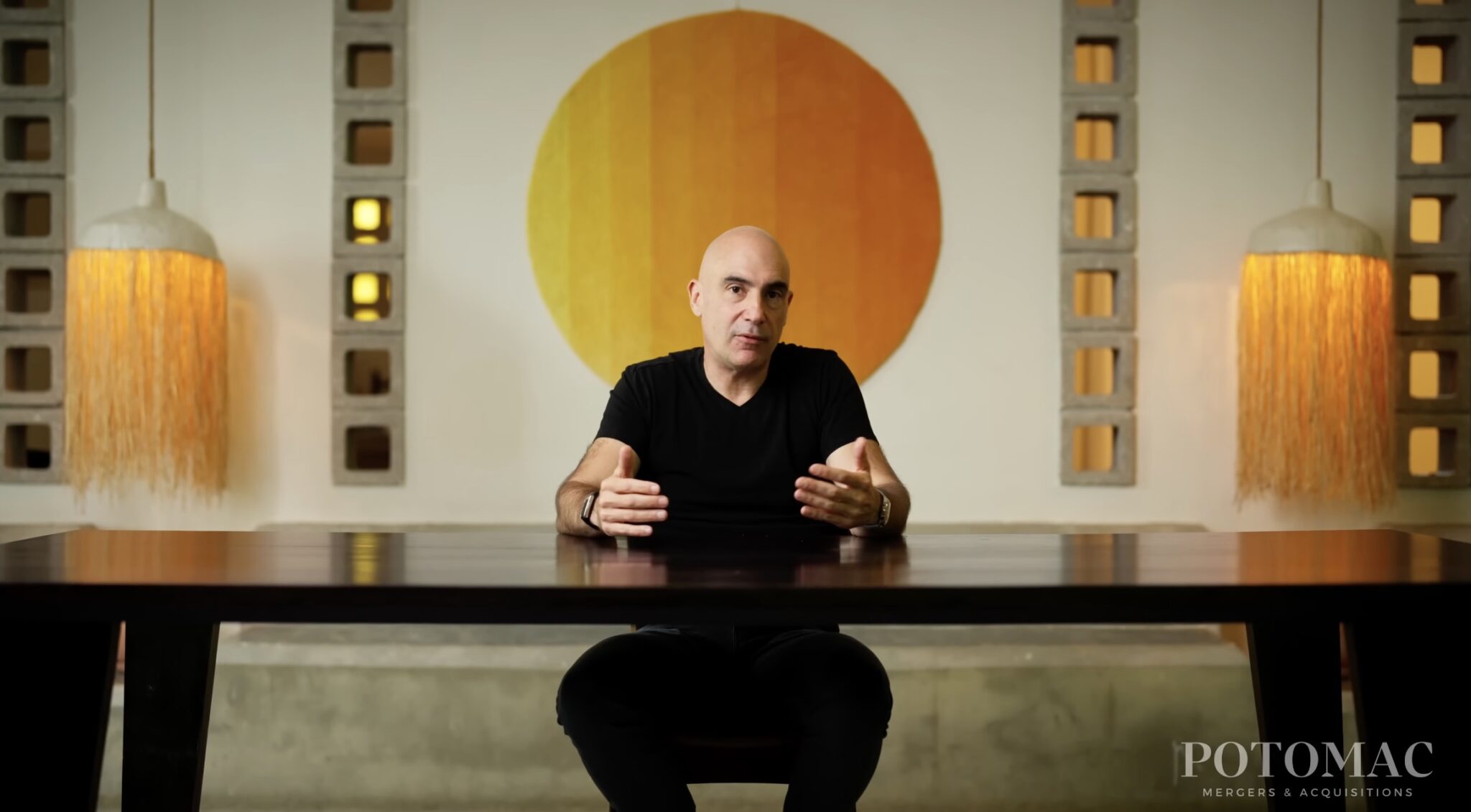



The Private Equity Survival Guide, Part 2 | Choosing the Right Partner | An M&A Masterclass
Gary was sold on this night. He found himself dining at Gibson’s in Chicago with his two best friends. Chris and John had been fawning over him all evening. Heck, they’d just flown him in first class from Tulsa just for this dinner. “Gary, we love your business. We want to do this deal. Now, keep in mind, at Cedar Fork Capital, we’re hands-on, but we’ll help you with strategy, and we’re growth-oriented, but we’re always founder-friendly.
Think about it. The chips you’re gonna be able to take off the table today are going to be massive, but that second bite of the apple a few years from now, it’s going to be huge.” Chris nodded in approval and joined in. “Gary, I’ve been doing this for a long time, and I just know a good partnership when I feel it, and this just feels right.”
And did it ever feel right to Gary? As John reached over to grab the check, he noticed Gary eyeing his watch. “Hey Gary, you like that? Here, try it on.” As Gary felt the weight of the solid gold Rolex Daytona on his wrist, Chris chimed in. “Gary, that looks great on you. Judy would love it. You know, it takes most people three or four years on a wait list to get one of those.
But you, being a Cedar Fork man, we can get you sorted out. You’d be one of us, Gary.” And it was in that moment, when Gary realized he had finally joined the club. Real executives were recognizing him for his abilities and his life’s work. As Gary reveled in the moment, John stood up. “Hey Gary, time to go.
Courtside tickets for the Bulls.” And with that, the whirlwind relationship was consummated. Within 60 days of that dinner, Gary received a wire transfer for more cash than he had ever seen in his entire life. Gary now owned 30% of a platform company in partnership with private equity, and a journey that began with excitement and anticipation soon gave way to a very different reality.
By month six, Gary was struggling. Sure, he was still in contact with his new friends, John and Chris, but instead of smiles and adoration, they questioned his every decision. The Cedar Fork guys did keep their promises. However, they were slightly different than how Gary understood them. When they said they had a hands-on management style,
what that actually meant was they would micromanage the living shit out of Gary and his team. When they said they would help with strategy, what they actually meant is Gary could barely take a dump without their permission. When they said they were growth-oriented investors, what that actually meant was every month they would deliver Gary and his team a seemingly impossible set of KPI targets.
This could be interesting. And the Cedar Fork guys talked a big game about being founder-friendly, but at the most recent portfolio company meeting, Gary was hard-pressed to find one single portfolio company that was still managed by its founder. As for the watch, they did keep their promise there.
Gary took it home from the closing dinner, but he soon stopped wearing it after both his brother-in-law and his nephew asked him for a loan. Oh, and they were right about him being in the club as a Cedar Fork man. It was his responsibility to go out and court protection sellers, but instead of steaks at Gibson’s and courtside at the Bulls, it was P.F. Chang’s and nine long innings of the Tulsa Drillers. “Meyers, like, you’re out!”
But it was the words of his wife, Judy, that cut Gary the hardest. She said, “I’ve watched you bust your ass for 30 years so you’d never have to work a job for people you don’t believe in, yet here you are.”
Hi, I’m Paul Giannamore. I’m an investment banker, and I negotiate for a living. Today, we’re gonna talk about how to look past the pitch decks, the steak dinners, and look into really how private equity works in order for you to make the best decisions in choosing a potential partner. For many of you, partnering with private equity could be the best financial decision you’ll ever make.
I know scores of people who are hundreds of millions of dollars richer because they did this the right way. If done correctly, private equity can provide you a lot of things you don’t have. For example, the access to capital that you don’t have today. Marketing, advertising capabilities, board governance.
How many of you actually have a proper board in place? Many of you don’t. The ability to hobnob with other portfolio companies and learn from CEOs — you’re part of the club, so to speak. There’s a tremendous amount of things that private equity can bring to your business, helping you do add-on acquisitions, helping you consolidate an industry, as well as, at the very end of the line, when it’s time to sell your business,
it’ll be done without emotion, right? These private equity guys spend their entire lives buying, building, and selling businesses. And so when they ultimately go to sell, they’re gonna do it the right way. They’re gonna run a competitive process, they’re gonna take the highest offer on the best terms, no emotions involved, no concern for the culture, no concern for the legacy, so on and so forth.
And I know that scares some folks, but at the end of the day, that’s what these guys do, and it’s an opportunity to really create substantial wealth for yourself. But if you do it the wrong way and you choose the wrong partner, you’ll potentially find yourself in the same position that Gary did: an unmitigated disaster.
This is what we’re gonna talk about today.
Broadly speaking, there are two types of individuals who sell to a private equity firm. First is the person who doesn’t give a shit. Second is the person who cares very deeply. So for the first person, the sale to a private equity firm is just a means to an end. It’s an entire change of control. This might be an individual who’s getting up in years and just wants to retire, hires an advisor, goes out to a full process, and in the competitive process, the private equity firm prevails as the highest bidder.
Now, the private equity firm might look at this and say, “Well, we don’t necessarily need this seller as CEO. We’ve got an operating partner we can bring in. We’ve got a CEO we can recruit.” So this person’s able to sell the business, take all their cash up front, or roll a very small portion, transition over a relatively short period of time.
So it might be six months, might be 12 months, might be 18 months, but at the end of the day, this person gets the cash in the bag, walks away, doesn’t have to worry about the business. Now, the majority of us are folks who care very deeply about the business and might use private equity as a tool to not only diversify our wealth, but magnify that.
So, for example, we might sell 70% of the business today. So we take the proverbial chips off the table, cash is in the bank, we can deploy it elsewhere. Now we’ve diversified the wealth that we have locked up in our business, and then we can roll some equity. It might be 20%, 30%, 40% into NewCo. So this is in partnership with the private equity firm.
And in those cases, I find that sellers fall kind of on a broad spectrum. Some want absolute control of their business, and they want private equity to come in as kind of a relatively silent partner. Others are more interested in diversifying their day-to-day life. So, you know, “I’ve been CEO. Now I want to be a figurehead or a spokesperson.
I want another operator to come in.” And then some folks want to really just step back and be on the board. And as we talked about in the Private Equity Survival Guide, the most important thing that you can do at the onset is determine what it is you want to do. What are your goals and objectives for you?
Person one, you just want to take cash and run, then private equity might work for you, but that’s not where you want to focus your efforts. You want to focus your efforts on a competitive sale process. And if private equity happens to be the highest bidder, then boom, you’re done. But if you’re looking at this saying, “Hey, I might have five or ten more years in me, and I have built an interesting business, but I don’t have the same sort of access to capital that my competitors have.
I don’t have the skill set and experience to do a lot of add-on acquisitions, but I know a lot of potential targets I could go out and buy. I might need to upgrade my financial systems and bring in a slightly better CFO than I have right now, which is really just a glorified bookkeeper and accountant.”
Private equity might be a phenomenal way for you to accomplish those goals, all the while diversifying some of your wealth, as well as putting you in a position — instead of owning a business that’s worth a hundred million dollars five years from now — might put you in a position to own a sliver of a $750 million business five years from now.
Unlike this first group of people, where the focus is the headline price, in this group, the focus isn’t on the headline price. It is on the partner, and that’s what we’re gonna focus on today.
We began today’s discussion with the fictionalized account of Gary and his partnership with Cedar Fork Capital, which unfortunately is all too common of a tale. And today we’re gonna talk a little bit about how Gary got himself in this position to begin with, and what Gary could have done to really set himself up for a win.
Gary had worked hard over the last 30 years building his family business and never really thought about selling it. But like you, he receives a lot of emails in his inbox and calls from private equity firms and search funds telling him, “Hey Gary, we’re super interested in your sector. Congratulations on your widget-making prize in 2021.
You’d be the perfect platform acquisition for our fund. Do you have time to get together?” So over the years, Gary received more and more of these emails, and his buddy at the club told him that Uncle Jim finally sold to private equity, made a killing. Another one of his friends sold to a strategic acquirer.
So Gary started to think to himself, “You know what? The house needs an addition. The wife wants to take more vacations. Maybe I’ll investigate this.” Like most folks, he really didn’t understand private equity. To him, they all sounded the same. But he thought, “You know what? Let me start to take some meetings.”
So he responded to Cedar Fork Capital. John and Chris jumped at the opportunity to sit down with Gary, and instead of coming down to Tulsa, they decided to fly him up to Chicago, where their home office is. Gary jumped on a plane, went up to Chicago, and heard all these great stories about business owners over the years that they had made millions of dollars for, and they explained to Gary, “Hey Gary,
you’ve got the opportunity to sell a portion of your business today. You can put the addition on the home, buy the boat, take your wife on vacation, and then you could roll some equity and invest with us. You’d still be the CEO of your own business, but ideally that position that you’ll roll — the 20 or 30% of the equity that’ll remain in the company — will be worth more than what you’re taking home today, four or five years from now, when we ultimately exit.
And of course you want to exit with us. We’re the experts at doing this, Gary.” So Gary went back to Tulsa, had a conversation with his wife, and, you know, again, he’d never really thought about selling, but he was getting all this interest, and now it began to whet his appetite for diversifying his wealth, taking some of the proverbial chips off the table.
Gary went out and had dinner with three or four other private equity firms that had shown interest in his business, but he didn’t really feel the same as he did about John and Chris. They seemed like good guys. They were straight shooters. He liked the office in Chicago. They had a lot of great success stories, and he felt comfortable with that.
John and Chris were honest with him. They were operating from the private equity playbook. And how does that work? Number one, proprietary deal flow. Private equity guys don’t wanna deal with guys like me in competitive auction processes. They wanna get proprietary deal flow with folks like Gary, who think that the buyer universe is just the companies that are giving him inbounds, right?
Gary’s not looking at the fact that he actually is the prize. He owns a scarce asset, and there might literally be hundreds of potential buyers for this business. His buyer universe is very narrowly focused. It’s the folks that have reached out to him, and of the folks that have reached out to him, he liked Chris and John the best.
And of course, Chris and John are, again, focused on doing exactly what it is they’re supposed to do. You know, if he takes some pages from Cialdini’s psychology of persuasion, number one, he talks about the principle of liking, right? We like people who like us. So they pile on the adoration and they fawn over him.
They praise him. It felt really good to Gary. He was getting recognition for starting this business from scratch and, over three decades, building it into something substantial. They recognized that, and it made him feel good. They liked him, he liked that. Of course, they piled it on further by taking him out to dinner, courtside at the Bulls, gifts.
They spent a lot of time, money, and effort. And in the M&A masterclasses, I talk about the principle of investment. Cialdini talks about the principle of reciprocity, right? So as humans, whenever somebody gives us a gift or a concession, we have an overwhelming feeling to return the favor. What that does is that further locked Gary into this form of tunnel vision.
The private equity guys wanted to make sure that he believed they only had eyes for him, and vice versa. And the more they invested in Gary with regard to time, money, and effort, the more difficult it would be for Gary to, quote unquote, cheat on them and deal with other parties. So as the acquisition mating dance took place over the course of a few months, they flew Gary to Chicago multiple times.
He felt more and more comfortable with them. He understood, “Hey, I’ll take chips off the table today. I’ll roll some equity. I’ll still be CEO.” He never questioned them about what operations look like. He never asked ’em questions about what sort of KPIs he would get. He never interviewed former CEOs of the portfolio companies.
He didn’t feel the need to. I mean, at the end of the day, these guys are the experts, so what does he really need to do? And no one ever educated him as to how to go out doing this. So he felt very comfortable, and on that last trip to Chicago, he decided it was time to pull the trigger. He signed the deal.
Now, of course, in diligence, because there was no competition for the private equity firm, although Gary hired a very experienced, highly skilled attorney, his attorney had zero leverage, because at the end of the day, the private equity firm had no competition, so they were able to really call the shots.
So with regard to the purchase agreement, there were some less-than-optimal terms in there for Gary. But, you know, Gary looked at it and said, “I’ve got this high-priced attorney, and all he wants to do is kill the deal.” Gary was already sold in his mind, and he emotionally and psychologically bonded with these guys, and that’s what happened.
The deal closed, no questions were asked, no diligence was done. Gary went on faith, because he liked these guys and he believed in them, and six months later it was a train wreck for Gary. So a lot of this stuff happens very, very innocently. You start to have these dinners and conversations. You slowly, as a seller, start to focus on one particular buyer.
You don’t do the appropriate diligence that you need to do, and next thing you know, you’re caught in a bad deal. I’ve met a lot of people like Gary over the years, and I really feel for them. You know, as businessmen, they’re focused on running their business. They’re not thinking about the acquisition universe.
They’re not thinking about competitive processes. They’re not thinking about how to do diligence on financial sponsors and private equity firms when they barely know what those guys do. And every one of them sounds the same. So this is a recurring theme I’ve seen over the years.
We talked about what Gary did. Here’s what Gary should have done to put him in the absolute best position to get the highest price, the best terms, as well as the best post-deal outcome. Now, the first thing he needed to do was shift his mindset. I mean, Gary, like many people, gets these emails and calls, and they believe, “Okay, this is the acquisition universe.”
That’s not the case. Gary has to realize that he is the prize and his business is a very scarce asset, and there’s gonna be a lot of potential buyers vying for this. So he needs to think from an abundance perspective, and he needs to go out and be the hunter rather than the fisher. And I’ve talked about this on the sell-side M&A masterclass.
You know, when you’re selling a business, you don’t wait for buyers to come to you. You go out and locate those buyers, and you run a competitive process. By introducing competition, the Cedar Fork guys would not have been able to squeeze him on terms and price, because the more optionality Gary has, the stronger his resolve is in negotiating.
So number one, mindset shift. Number two, run that broad process. Number three, he is in a position to choose. He does not need to be chosen. He’s interviewing the private equity firms, not the other way around. So he needs to take control of that process. And so Gary decided, “Hey, I’ve got a wonderful investment opportunity.
I’ve got a five-plus-year horizon. I’m gonna take some chips off the table. I’m gonna build this thing, and I want to exit it for a massive payday five years from now. Now I’ve gotta find the right partner.” And so, instead of finding himself in the position where he’s talking to Cedar Fork and maybe one or two other players, now he’s got 50 or 60 private equity firms.
He’s gone out and researched which private equity firms have made investments in my industry, both past and present. They certainly get contacted. Which other private equity firms are generalists and would likely take a look at my industry and my business? They get contacted. You go broad. It might be 40, it might be 50, it might be 200 private equity firms.
You might sprinkle in five or six strategic acquirers just to push upward pressure on price. But you run that full process, and then once you whittle it down, you get it down to the last maybe two, three, four players. You’ve pushed up the price. You know, Gary was originally focused on the headline price, but as I said earlier on in our discussion, it’s the pros that are really focused on the partner.
Once you get that price up to where it should be, now you focus on the partner. So once you’ve got those two, three, four, five private equity players, now you’re able to go sit down with them, and you start asking them questions. They begin with: who are you, right? So, what fund are you in? Are you in fund one, fund two, fund three, fund four?
Sometimes when they’re in the first fund, that means that the private equity group is new, right? They’ve just raised one fund, and that might be risky, right? They don’t have a track record. You’ve got somebody that’s in fund five or six — especially five or six — and you’ve got the same limited partners, or LPs, investing in each of these funds.
They’ve got a track record, right? These LPs are coming back, they’re getting a return, so they want to invest in the next fund. “Oh, we did a great job, next fund.” I am not saying that you shouldn’t partner with somebody in fund one. I am an LP in a brand-new fund. I’m in a fund one right now, but the reason why I’m in the fund one is because the guys who put this firm together came from other firms that I respect.
They have a track record, and I think they’re gonna kill it on this. So for me, investing in fund one was exciting. Again, I don’t think you should exclude a private equity firm just because they’re fund one. It just means you have to do a little bit more diligence. You might wanna talk to their LPs.
Now you sit down and you ask private equity firms that. Hey, one says, “I’m in fund two.” Okay, well, where are you in fund two? How much capital have you already blown through in fund two? “Well, fund two is a billion-dollar fund, and we’ve spent a half billion dollars already.” Well, 50% of the fund is now extinguished.
So how much runway would there be for you? And so you could take that when you sit down with a private equity fund, and now you’re writing down your questions, and you’re gonna cross-reference everything with the past portfolio companies, right? So, “Paul, we’re in fund five, and, you know, we’re about a third of the way through.”
Okay, that might be acceptable. When I check the references — or rather, when Gary checks the references — now he’s gonna be able to talk to the other CEOs and say, “Hey, where were you when you partnered? Where were they in the fund? Were they the beginning of the fund, the middle of the fund, the end of the fund?
And how did that impact you?” You’ll be able to ask them, how many platform companies will you acquire in this fund? I mean, it’s like, hey, you’ve got a billion-dollar fund and they’re committing, you know, 150 million in equity per platform company. How much is left over for acquisitions? So understanding how many platforms will fit in each fund, of course, is important.
And then getting the private equity firm to commit to you up front. It’s like, “Hey, I’ve got this great business in Tulsa, you’re spending a hundred million dollars on it, and there’s a lot of potential acquisition opportunity out there for us. I, as Gary, want to blow the heck out of this thing, and I wanna do a lot of different deals.
I don’t wanna be reckless, but I think I know a lot of competitors we can go out and buy. How much capital are you setting aside for me to do M&A?” Then with that answer, now you’re able to go back to the past founders and CEOs and say, well, how much did they tell you they were gonna be able to invest in acquisitions?
How were they when they invested in acquisitions? Were they reckless, paying any sort of number? Were they far too disciplined in running scared, right, so you never got any deals done? So how much money did they promise you that they’d be able to invest in acquisitions? How much did they actually deploy?
Who made those decisions? So, “Private equity firm, we’ve got an acquisition target. I bring somebody to the table, I think it’d be great for this business. Who do I need to talk to? Is it the partners I work with? Does the investment committee — whom I don’t even really know, the investment committee, and they don’t really know my industry,
they’re just finance nerds — are they the ones making the decision as to whether or not I can go out and make this acquisition that I think it’s gonna grow the shit out of my business? I don’t know.” So I need to know that. What do the LPs have to say? I mean, do we have to go to LPs and ask their permission for us to do an add-on acquisition?
Like, how far does this actually go? What does the decision tree look like? And then again, cross-reference that with the past portfolio CEOs. What did they go through? What was it like to actually do a deal? How did they have to support that? Was the fund reckless? Was it too disciplined?
Where was it? So I think these are all important questions, because, again, if I’m Gary and I stick to myself, my deal’s a hundred million, I’m rolling 30 million into this, so I’m gonna own 30% of this, then I wanna go out and do deals. How much is available for me to acquire? Like, I know that I can go out and spend 300 million and I can grow this business.
Does that capital exist? How do we fund this? You know, Gary would also be wise to ask each private equity fund what the required rate or targeted return is — the IRR or multiple on the fund. So some private equity firms will say, “We need to earn three X our money,” or, “We’ve got an IRR target at 25%.”
That’s all well and good. Those are their targets. Now go back to the CEOs. “Hey guys, what did they tell you the targets were? What did you actually get out of this? John, you sold your business to XYZ Capital for a hundred million bucks and you exited. How much did you exit for? What was your internal rate of return on your investment?”
Past practice, of course, doesn’t guarantee future performance, but it certainly illuminates how these guys operate and how disciplined they are in deploying capital. So, asking the questions first to the private equity firm, make your list, get ’em all figured out, and then cross-reference it to determine what, if what these guys are saying is actually true.
I mean, what you might hear is, “Hey, we’re really hands-off. We let the founders make all the big decisions.” And then you talk to the former founders and they’re like, “Hey, they didn’t let us do jack shit. Like, I’d ask for permission to take a dump.” That will inform you how honest these guys are being.
Another area Gary really could have focused on is operational cadence, right? Cedar Fork said, you know, “We’re hands-on, but we help you with strategy.” Gary really didn’t get into the details. What does that actually mean? So again, if we start with the private equity firms and then we cross-reference with former
portfolio or platform presidents, we can get a really solid idea of what’s going on. So, for example, questions that Gary might have is, okay, who actually is forging strategy for the company? Who’s actually putting together the budgets and the forecasts and the targets that we need to hit? Right? Is this something that’s mandated from the top down?
We’ve got some finance nerds in the background saying, “Hey, this business should be growing 15% per year organically,” which, you know, is near impossible. Or is this something that you and your team are using aggressive goals? Because obviously you’re an investor in here and you want to grow the heck out of this business, but is this coming from you?
Is it coming from them? Now, again, portfolio presidents, how do they deal with you? What’s the cadence? I mean, do you report to these guys daily, weekly, monthly, quarterly? And what level of approval do you need for ordinary day-to-day decisions? Does the private equity firm and the board step in for big asset disposals, acquisitions, refinancings — or if you need to buy a new truck, or hire a new mid-level manager, do you have to go to the board? Again, ask the questions of the private equity firm, cross-reference.
When I talk to sellers who’ve sold to private equity, I hear a variety of different things, and it’s a spectrum. On one end of the spectrum, I hear, “Hey, I’ve been buried in constant Zoom calls and updates.” On the other end of the spectrum is, “Hey Paul, I feel like I didn’t even really do a deal. I mean, we have quarterly board meetings and they check in and make sure we’re hitting our numbers, but other than that, I don’t hear from them.”
And then there’s a wide ground in between. Understanding this operating philosophy is gonna be paramount to you, especially if you’re like Gary and you wanna run the business. You want to forge strategy, you want to make acquisitions. You’re probably — and, if you’re competent, you’re probably gonna want — more of a hands-off approach.
You’re gonna want the private equity firm to say, “Man, Gary really knows what he’s doing. I mean, he’s done a great job over 30 years. He’s really growing this. Let’s not touch this. Let’s provide him the resources that he needs and he’s gonna grow this investment for us.” So if that’s you, that’s the cadence you’d want.
Other folks, though, might find themselves in a position where the business has somewhat outgrown them. And this is a real situation where you’ve worked for many years. You had a $5 million firm, then a $10 million firm. Now you’ve got a 50-million-in-revenue business, and you’re feeling like it’s getting a little chaotic and complex for you.
Like, you don’t have the skills and resources to manage it like you used to. That’s okay. You might want more of a hands-on approach. You might want them recruiting and bringing on an operator to help you. And again, that day, you’re trying to safeguard your investment and they’re trying to safeguard theirs.
So this isn’t a pride thing. If you need that help, you might want more of a consistent operating cadence at a shorter interval, where the private equity firm is checking in with you more often and providing more assistance. So it depends upon your capabilities, and it depends upon your desire, but you’ve gotta make sure that operating philosophies match.
Some firms are very hands-off. I mean, I’ve done a lot of deals with private equity firms that are very, very hands-off. I’ve also done some that are hands-on. If there’s not a good match between you, then there’s going to be friction, and then you’re gonna find yourself, like Gary, hating getting out of bed every morning.
One of the most important things when partnering with private equity is actually starting off on the right foot. And what I mean by that is making sure that the deal terms are appropriate from the get-go, so you get to the closing table, then you get into post-close, you don’t have all sorts of awkwardness.
Let me give you some examples. If you’re partnering with private equity, are you investing pari passu with them? So in Gary’s case, he rolled 30% of that business — a hundred-million-dollar transaction, 30 million gets rolled. Now he’s partnered with Cedar Fork Capital. Do they both own the same slug of equity with the same rights?
Are they both in at common? Are they in at common and preferred? Or does the private equity firm have any liquidation preference, for example, on top of that, meaning that they get paid out before Gary does in the event something goes awry? A lot of these deal terms get buried in equity participation and purchase agreements, and they need to be vetted.
And that’s why I always say in a competitive process, it’s extremely important that that all gets figured out in the term sheet, even before you get to the asset purchase agreement. What sort of equity is being acquired here? Further, where’s there a management fee? Right. So the private equity firm sits up at top, and then we’ve got the fund below.
The private equity firm will typically take a management fee from the fund. Is the private equity firm taking the management fee before you get paid, or is there no management fee on your equity? Are you excluded from that? And it’s a very important aspect, because management fees can be anywhere between one and 3% per annum, which over time will hit your returns.
So, understanding that — I’m not saying what’s right or wrong, it’s obviously preferred that you’re not paying a management fee, and there are a lot of private equity firms that will do that — understanding that, so there’s no confusion and you can bake that into your projected returns, I think is very, very important from the outset.
And again, had Gary run a competitive process, he would’ve been able to eliminate a lot of these things as issues, because all the private equity firms would’ve been on the same footing. The purchase price would’ve been driven up simultaneously, and a lot of the funky terms that were anti-Gary would’ve been removed from the term sheet, as opposed to him just dealing directly with one acquirer, with zero competition,
and, quite frankly, zero incentive to remove anything that in any way, shape, or form impaired their position in the investment.
Gary would’ve been very well served to focus on what corporate governance looks like post-closing. Who sits on the board? How many board members are there? Does he have the ability to veto anyone from joining the board? Meaning, let’s say that you’ve got the industry dunce that you’ve known for 20-plus years, and he’s worked for five competitors.
He can’t keep a job. Now, private equity firms nowadays will pretty much pull anyone that has a pulse, sometimes, as an operating partner or put them on the board, and I’ve seen it. A lot of these guys provide zero value whatsoever. In fact, I think some of the stuff that they say could potentially be detrimental to the investment.
Do you want a total moron who’s worked in your industry on your board, and will you be able to do anything about it? It’s an important question to ask, because I see this happening. So board governance: how often the board will meet, what the board decides on, what do you need to do at the board meeting?
Well, you’re the CEO, so you’re gonna be presenting. What do you need to do in order to prepare for that board meeting? What team will help you with that? Is that somebody internally at your company that’s gonna be preparing a board book, or is that somebody you’ll have at the private equity firm that’s gonna help you prepare that?
So understanding that is important, because for the most part, board meetings will not require a lot of preparation from you. However, if you don’t have the resources and you’re not used to doing this, you could end up spending a lot of time getting prepared for every quarterly board meeting, which, quite frankly, can be quite stressful.
So understanding that cadence — how the board’s set up, what the board will do, when the board will meet, how you’ll get prepared for the board meeting — I think is going to be very important, ’cause 90-plus percent of mid-size businesses do not have formal boards and are not used to dealing with this shorter red tape.
Now, I do think that the board can provide a lot of benefits. And so you shouldn’t look at it and say, “Well, dammit, now I have to report to a board. That sucks.” No, I mean, the board’s there for a reason, actually, and the board can and does provide a lot of value. It just has to be set up right, and you have to understand the role of the board and how you get prepared for the board meeting.
So these are important questions, and what I always say is, first, again, ask the private equity firms you’re talking — you know, Gary’s talking to three or four of ’em now. Ask the partners what they have to say about it, and then go back to the band of CEOs. “Guys, what was it like going to a board meeting?
How did you prepare? What sort of questions did they ask you? Was it stressful?” Get that all figured out. Then compare and contrast what you learned from the private equity firms, as well as their past and current portfolio companies. I think they’re great folks to talk to.
You know, an important aspect of partnering with private equity, of course, is the exit, right? The front end is the consummation of the deal. It’s not like selling to a strategic acquirer where you take a hundred percent of the cash and you walk away. Now you’re a partner, and so you’ve got another 10, 20, 30, 50% of the business still locked up with these guys.
So at some point there needs to be an exit. So when you sit down with the private equity firms, the primary questions you want to get out of the way right away are: how would you intend to exit this business? Now, if you’re a lower-middle-market business doing 20 million in revenue, the chances of them taking you public are slim to none.
So that’s probably not an option. But if you’ve got a much bigger firm, that might be an opportunity. Either way, how do they intend to exit? When, right now, on the onset, do they think they would attempt to exit it? Well, of course it depends on the fund life cycle and how much cash they’ve already committed, amongst other things, like economic conditions.
But at least try to get a ballpark idea. “Hey Gary, we think we’re probably gonna hold this five years, or three years.” Try to understand that, to make sure that there’s alignment, because you, as a CEO, might have certain goals to accomplish that might take you five years to do. And if they wanna do a quick exit, that might complicate things for you.
So you have to think about timeline to exit. How will they intend to exit, right? Will it be a sale, or a strategic, potentially another private equity firm? And I bring this up because if they think they might sell to another private equity firm, what’s the chances of you having to go along for the ride?
They hold you for two years. Bigger private equity firm comes in and says, “Hey, we wanna buy this, but, you know what, we need Gary to come along with us.” I guess a strategic acquirer might not require that, but potentially a private equity firm would. So it’s important to understand, okay, what happens if that’s the case?
And, “I don’t want to do that.” The other thing, when I think about exits — which comes up as a question to me all the time — is who actually decides? Like, who decides when the exit’s gonna be? Is it Gary? Is it the private equity firm? Well, no, at the end of the day, it is the private equity firm, unfortunately.
I mean, they’re going to be the majority owner of that business, that are optimally gonna be able to pull the trigger. You would likely have drag-along rights, tag-along rights, and of course your investment banking team and your legal advisor will be able to explain to you how all of that sort of stuff works.
But at the end of the day, it’s the private equity firm that’s gonna drive this exit decision. So even though they told you they might hold it for five years, I mean, if I think back to 2020, we all remember what happened to the capital markets in 2020 and 2021 when central banks around the world were printing all sorts of cash.
The financial markets all went vertical overnight. And so we saw a massive compression in how long private equity firms were holding businesses. Historically, it was four to six years, and all of a sudden, 2021 and ’22 came around and these guys were dumping these things, ’cause prices were just getting so frothy.
And so there are economic conditions that can influence it, but at the end of the day, it will be the private equity firm that makes that sort of decision. But I think it’s important for you to ask that because, you know, I have seen certain circumstances where PE funds will come to the founder and say, “Hey Gary, there’s a great opportunity for us to exit this now.
Do you have two more years in you? Because if you do, we can make this acquisition, we can build value here, and then maybe we’ll exit in the future. Or, if you’re not really into that, maybe we’ll just take the opportunity right now to exit.” So how much influence will you have on that decision? Are these the types of guys that are kind of come and ask you about that?
Or are they the kind of guys that you’re gonna wake up one day and they’re gonna say, “Hey, we hired an investment bank and the business is on the market”? Again, take what they have to say now and then cross-reference it. You’ve got a handful of CEOs who’ve been through this, who have now exited with this very private equity firm.
How did that go? How far in advance did they start talking to you about the ultimate exit? Was it six months? Was it a year? Or did you find out when the business was already on the market? What sort of participation did you have in the sale process? Were you going to bake-off meetings with acquirers? Did they keep you in the background?
Did you have any choice? So was this purely a financial decision — the company was sold to the highest bidder — or maybe you intervened a little bit and somebody was willing to pay a little bit less, but you thought it was a much better cultural fit for the business? Did the PE guys listen to you? Now, you might not care about that, but there are some people out there who are not gonna want their baby that they founded, and partnered with a private equity firm, and then all of a sudden now the private equity firm is turning around selling it to their arch-enemy.
Right? That might be you. And if that is you, or potentially you, that’s a really good thing to not only help upfront with the private equity firms, but also the band of former CEOs, to see how they dealt with that.
If you’re considering a private equity transaction, and you, like Gary — I encourage you to spend as much time as possible, much quality time, understanding both the upside and the downside in math. So you go out to a process, you deal with a bunch of private equity firms, they’re making offers, they’re bidding, so on and so forth.
And again, you narrow it down. Now you’ve got three PE funds that you really like. You wanna get down to brass tacks. You’ve asked ’em a bunch of questions. You’ve talked to the band of former CEOs. You’re feeling good. You really want to drill down on what the economic terms look like and what’s in it for you.
Like, for example, does your rollover equity have any sort of a ratchet in it? How much of the total company equity is being put aside into an employee management pool, right? So let’s say that a business is worth a hundred million. Let’s say it’s got a hundred-million-dollar equity value. Are we taking 10% of that?
So 10 million of that hundred million and putting it aside and allowing management and maybe other key employees to have equity incentives, options, so on and so forth — because of course that takes away from the private equity firm, takes away from you, but it also incentivizes the management team. What needs to happen in order for you to get your return?
Again, we talked about, are you investing pari passu with the same class of equities? Is there any sort of liquidation preference above you? Provided that’s not the case, walk through the math. If I were you, I would want to know, how is the private equity firm modeling this transaction? What sort of assumptions have they made?
So, for example, they’re gonna look at your business right now and they’re gonna project it out for five years. This is the performance over the next five years. Here’s what organic growth, here’s what we’ll do in acquisition, so on and so forth. Here’s what the financial model looks like. What assumptions are they using, and what sort of numbers do you need to hit in order to get X, Y, and Z as a return?
What happens on the upside? What happens on the downside? What happens if we don’t perform? Can they ratchet away any of your rollover? Were there earnouts baked in there that you’re not gonna hit? There — the smorgasbord of options is way too large for this discussion today, but understanding that — and most private equity firms will sit down with you and be pretty transparent.
“Here’s how we’ve modeled this out. Here’s the portion of the business that you’re gonna own post-closing. Here’s likely how you’ll be diluted by financings, by subsequent acquisitions.” Remember, when you go out and do deals — so you’re the platform business, for example, you go out and you make acquisitions — every time you do an acquisition,
the private equity fund might allow that seller now to roll equity into your platform business. And so, as that sort of stuff happens, you could be potentially diluted over time. Again, this is par for the course of these deals. It’s typically nothing to worry about, but it can impact you. And so you can’t go into this like Gary, which is like, “Oh, there’s a couple buyers, and we sit down and they took me to a nice dinner.
I’m gonna do a deal,” blah, blah. No, take control of this and understand it. Or did somebody on your side of the table that could help you understand it, because it’ll be important.
You know, the issue I raise now, obviously, is largely if you’re a platform acquisition. In a perfect world, you’ll be a platform acquisition and you’ll be able to do add-on acquisitions and grow and exit in the future. But the majority of us will be add-on acquisitions. And an add-on acquisition, as we discussed in the Private Equity Survival Guide, is exactly what it sounds like.
It’s an acquisition that adds onto the platform. And when I talk about fund size, I think fund size is important, because let’s say that you’re a $50 million business and you are going to become a platform for a private equity fund. Well, if you are a platform for a $500 million fund, that’s one thing.
But if you’re a small platform for a $2 billion fund, it’s akin to — if we imagine for a second, Gary owns Breeze Airline, right? No one’s ever heard of that. It’s a real airline. But Gary owns Breeze Airline, and he’s got two options. He can deal with a middle-market private equity fund that’s gonna make Breeze the platform and then go out and acquire a bunch of other small regional airlines under him, or a big fund here wants to get into the airline industry.
And they’re like, “You know what, Gary? We like you. We like your business. We want to buy Breeze Airline.” Fine. Well, they buy Breeze Airline, and then three months later they get an opportunity to buy American Airlines, and they’ve got the funds to do it. So they now take American Airlines private. I can guarantee you they are not going to rebrand American Airlines “Breeze Airlines,” right?
Your business now will be American Airlines, whereas if you were Breeze Airlines for the smaller fund, they can’t buy American Airlines. Breeze Airlines will likely stand as the platform. A lot of sellers are emotionally attached to their business and the name and so on and so forth, and they don’t want these things touched.
Well, you’ve got a much greater likelihood of that happening if you are a smaller platform in a much larger fund than being a larger platform in a smaller fund.
So for advisors out there, you might be asking yourself, well, Paul, when you’re working with a Gary, how deep into the weeds do you actually get with diligence on each of these private equity firms? And that is a great question. I, over time, have tended to shy away from actually making the CEO calls, or being on the CEO calls.
So, years ago we used to do diligence on PE funds. I used to hop on a call with a private equity fund, we would be with a client, we would ask a lot of the questions on the client’s behalf, and we still do that. But now, when it’s time to kind of do the cross-referencing, I used to actually get on the call.
So I would be with my client, we would be in the office, or we might be on a conference call, and we would call Joe Blow, right? “Hey Joe, I saw you were part of Cedar Fork Capital for three years and you exited.” And Joe’s like, “Well, how’d you get my number? Did they get you my number?” Now, we did some research and we found it.
Joe was a little bit surprised somebody would be checking that reference, and Joe then would get an opportunity to talk to Gary, and they would have a chit-chat about what life was like at Cedar Fork. And what I realized over time is that the past references, especially when they had anything less than glowing, would say more when it was one-on-one with Gary — for example, the client — than with both Gary and myself on the phone.
So over time I just quit getting on those calls with former CEOs. I think it’s a great opportunity for CEO and CEO to talk. They speak each other’s language. They can ask a lot of those questions. I think it flows better, and I don’t feel like they’re as closed in, the references, when it’s just one-on-one with the potential seller.
So my recommendation — you know, of course you could do that, but my recommendation would be let the client have those calls one-on-one. Of course, you, though, can drive the conversations with the private equity funds. Now, if a client is not outgoing and is a little bit timid asking those questions, sure, we should take a run at it.
But the way that I do this is I make sure that the client has a smorgasbord of questions. Here’s the questions, here’s why you should be concerned with this, here’s why you might want to ask this question. I provide that to the client, I get them thinking about it, and I actually like them to drive the questions, because I find that, quite frankly, when Gary asks the question in his own words, it’s way easier for the private equity
firm to respond in a way that he would understand. When I ask them, they’re talking to another finance guy and they’re using jargon. But when Gary understands the questions and Gary can ask them himself directly to the principals of the private equity firm, they really try hard to speak his language. So I feel like it’s much more effective if you get the Garys of the world, or your clients, to actually ask the questions, both to the private equity funds as well as to the reference points.
Now, I’ll put a link below in the description, and I’ll put a sample question sheet. Anyone can download that, whether you’re a potential seller or another advisor, to look at what we provide clients. In addition to providing clients with questions, we’ve gotta do the research, right? Like, we’ve got the databases, we’ve got the research teams.
We’ve got the analysts, so they can dig in. I can give them, you know, 40 private equity funds. They can pull all the platform acquisitions, they can calculate the add-on acquisitions using press releases, using databases, using a lot of the stuff we have in-house, and they can provide the client kind of a full dossier on each private equity fund.
Now, we don’t want to do it on a ton of ’em. We really want the client to get the feel. So we’ve got price and terms, of course — that’s most important in a lot of ways. But then also the client should get the right feel for the various different private equity funds. We will narrow down the playing field, and I would say we do this on maybe the top five maximum on each deal process.
And then the client can effectively look at all the deals that the private equity fund has done. They can look at who the former sellers were, the partners, did they stay around. So we try to go above and beyond and say, okay, Cedar Fork Capital bought ABC Company, and ABC Company was founded by Joe Smith.
And so we see Joe Smith was the CEO for two years, and then Randy Coleman is now the CEO. So what happened to Mr. Smith? Did he quit? Was he fired? Was he run out of Dodge by the sheriff? We need to understand that, but it gives us a really good reason to talk to both Coleman as well as Smith, right?
And we’ve got that on the document so that the client can see that. So I really encourage you, as an advisor, to do the research and put your client in the best position. Because from the private equity funds — and again, I think most of these guys are straightforward and honest, and a lot of ’em will — everyone’s got a shit show of a story, right?
That almost all of these guys have had some sort of busted transaction. They’ve retraded, or something bad’s happened. A lot of ’em will say, “Hey, we’re not proud of this, but here, talk to this guy. Like, we could have done better, and we learned from this, and here’s what we learned from it.” But I find that, for the most part,
when you ask for references, you’re gonna get testimonials. So in order to avoid that, you make sure you do as much research as possible so that you can, of course, talk to the testimonials, but you also wanna talk to Joe Blow, who’s like, “Oh, how did you find me? I’ve been hiding under a rock. Like, the deal was a total disaster, and I would never do it again.”
“Hello?” “Hey Joe, this is Gary calling. I’m contemplating doing a deal with Cedar Fork Capital, and I understand that you were a portfolio company at one point, you sold to them.” “Gary, Cedar Fork Capital? Whatcha talking about? Like, cluster fuck for Campbell’s, more like it. Better watch your six, Gary. Those guys, they were dirty.”
And, you know, you’re inevitably gonna have those situations where Gary talks to Joe Blow and it was an unmitigated disaster. And what you’ll realize is that Joe Blow was actually the Gary from the beginning of today’s discussion. Like, Joe Blow was approached by the private equity firm, did zero due diligence, had no idea what difference private equity firm A was from B, looked at the headline number, didn’t really assess the partner, got into bed with these guys, and then realized it wasn’t what he thought it was gonna be.
And it wasn’t because they lied to him. They were probably very honest with him. They were just speaking two very different languages. And when somebody’s like, “Yeah, I am gonna write you a check for a hundred million dollars, and by the way, you’re gonna roll 30 million into this NewCo, and I’m gonna take this 30 million and I’m gonna turn it into another a hundred million five years from now,” and they’re thinking about generational wealth and all the stuff they’re gonna buy, they get tunnel vision.
And they forget about all the details that go into this thing to make day-to-day life actually worth living. They get focused on the big numbers. They get focused on courtside at the Bulls, the watch, and the this and the that. So Joe Blow could very well have been Gary, and I think that’s a great reference for this Gary as to what he shouldn’t do.
But he also needs to take things with a grain of salt. And I’m mentioning this because it’s an important thing. Inevitably there are portfolio companies, there are CEOs, founders, that have had bad experiences and it’s actually not the private equity fund’s fault — or maybe it was their fault, but they learned a very valuable lesson.
“We’ll never do that again.” And so, you’re an advisor, you’re working really hard on a deal, you’ve run this great process, got huge numbers, and you’re like, “Man, I am way better than I thought I was at this.” And then the client does reference checks, everything’s great. And then he talks to one guy who’s like, “Oh, those guys are bastards.
Don’t do a deal with ’em.” And he’s like, “Oh, maybe I shouldn’t do a deal with them.” And you’re like, “Oh, I just wasted a year of my life on this transaction.” The seller screwed it up himself, or there was a misunderstanding, or the private equity firm did something wrong, but learned and repented for their sins.
This kind of stuff happens. And that’s the reason why I used to be on these calls in the early years, is because this sort of stuff happened and I wasn’t on the call. I was like, “Shit, I should have been on that call, then I could fix this.” But over time, I realized that it’s better for me not to be on the call.
It’s better for Gary to hear from the Joe Blow. And then when he brings all this stuff back, then you can sit down — the right thing to do is sit down with the partners at the private equity firm and say, “Hey, we had a call with Joe Blow, and it was an unfortunate call. You know, we heard a lot of things we didn’t like,” and give them the opportunity to explain. Because I do think that when I look at the private equity industry, I think that there are a lot of very, very good firms out there that have investors that are vested in the success of this.
They do great deals. They try to deal fairly and honestly with the people that they partner with, and snafus do happen, so you don’t want to necessarily throw the baby out with the bathwater.
You know, another thing that I think is important for advisors to keep in mind is that it’s your job to inoculate your client from the psychological and emotional impact of the buyer courtship. And so, I talked about this a little bit earlier in today’s discussion, but you know, if we take Gary for example, Gary was wined and dined by Chris and John.
They flew him first class, steak at Gibson’s, courtside at the Bulls. They flew him up to Chicago half a dozen times, and they’ve invested a lot in him. And, you know, they fawn over him, they adore him, they get him, right? And so for a lot of these business owners that are effectively toiling in the vineyard, and then there’s interest in them, there’s interest in their company, it becomes very intoxicating.
And, you know, I’ve had clients say to me, “Well, you know, the guys at Cedar Fork Capital, you know, took me out to all these dinners and sports games, and they spent a lot of money. And, you know, I—” Well, no shit. That’s their job. They’re attempting to buy your business at a $30 million discount. I would say the 25 grand that they spent on entertaining you is probably a great return on investment, right?
I mean, clients often do not understand what’s going on. They can’t feel it. I mean, when John and Chris demonstrate to Gary how much they like him, I mean, Gary’s naturally going to like them, and when they spend all of this money on Gary, he’s automatically gonna want to reciprocate. You know, I had a conversation with a client once who called me up because he ran into a deal.
He was just like Gary. He got approached by private equity. He went out and met with a bunch of these different guys, and then he started getting the sneaking suspicion that he was being underpaid for his business. So, let’s say this is a $50 million firm, and he thought, “Well, maybe it’s worth 75, but I’m not quite sure.”
And he had his own Chris and John that he was dealing with. They flew him here and there, they had dinner, it was like he met the family. And at dinner one night, he sat down with them and said, “Hey, you know, I really like you guys, but, you know, I only get one shot at this. And, you know, I’m thinking about talking to an advisor.”
And they came back to him and said, “Hey, you could do that, but, number one, we’ll pay you top dollar.” And by the way, that statement in and of itself is impossible to disprove. I mean, by definition it’s true. They’re gonna pay him top dollar, whatever that is. But they said, “Hey, you know, the boss man wouldn’t really be happy with us, John and Chris, if he found out, you know, we spent all this money on you and really built this great relationship, and we thought we had some sort of a deal, and then you were gonna bring an advisor on, and the advisor would just like shop us and find a different partner,” and so on and so forth.
And he called me, and he, for weeks, had a very hard time meeting with anyone else, because he didn’t wanna cheat on John and Chris. And these guys liked him. They spent time and money and effort on him. He didn’t want to disappoint them. He had a natural inclination to reciprocate their generosity by doing the deal with them, so that they would look good in front of their boss.
It is a very intoxicating and very powerful psychological force that I see in play all the time. So as an advisor, your job is to inoculate your clients. I don’t care who’s spending what money, taking ’em to whatever game, buying whatever steaks and sushi. At the end of the day, the private equity firms — or strategics, not just PE, but any sophisticated buyer — will take this approach, because they know that their worst enemy is competition, right?
Number one. Number two, the seller needs to like them. And number three, the seller will reciprocate, right? And it’s not gonna be kind for kind, right? If they spend a lot of money and take him to games and so on and so forth, he’ll reciprocate that goodwill by not talking to another party, for example. And so, again, it’s very powerful.
Sellers oftentimes don’t realize that it’s actually happening, ’cause they really do feel bad. I mean, this guy actually legitimately felt bad. “These guys spent a lot of time, money, effort on me, wined me and dined me. Now the boss is gonna be upset with them. I couldn’t do it. You know, what could we really do better?
Like, is there really a better deal out there for me?” And what it did is it mentally closed off his mind from options, right? Like, “Yeah, like, I’m not particularly excited about this girl, but I’ve gone on a lot of dates with her, and, like, is there really a better option out there?” And then you come from a mindset of scarcity.
You close yourself off to optionality. When you close yourself off to optionality, you don’t have nearly as much resolve when you negotiate. So, advisors, it’s your job to explain to your client the dynamics of this. And I always say, like, every buyer out there — if you’re out there and you wanna buy a business yourself, you should watch what the sophisticated players are doing, because they’ve had a tremendous amount of experience in what works.
And what works is, you want to make sure that the seller believes that price is objective, right? “No one else — there’s a going rate, and I’m paying top dollar. No one can do better. I really love you. I’m the guy who really recognizes everything that you’ve done in your life, what we’ve built, and how special you are.
And by the way, I’m gonna take you here, I’m gonna take you there, I’m gonna spend money on you and just show you how much I care about you.” It becomes very difficult for sellers to look at other folks. So that’s a play that all buyers should use, and it’s extremely detrimental to sellers if it’s not counteracted.
So you, as an advisor, the antidote to this — and how you do that is, of course, you stack the deck and you bring in a bunch of other buyers. And now, when five or 10 different buyers are fawning over the seller and taking him to dinners and flying him places, well, now they’re just one of the crew. They’re not the only girl at the bar.
So the guy who called me, wondering if he was leaving some cash on the table and didn’t want to offend the buyer, ultimately ended up seriously offending and insulting the buyer. He ultimately engaged us. We took him out to a full process. His purchase price ended up being like a ridiculous, like, 20 or 30% more than what he had originally was ready to ink a deal for.
And we attempted to bring that buyer into the process. They didn’t even want to play. You know, they basically said this, “This is insulting. We’ve spent so much time, money, and effort with this guy. He dragged us on and on, and now he goes out to process.” And I can understand how they feel about that, but at the end of the day, that’s what you need to do as a buyer, right?
And so, you know, in a lot of these masterclasses, I tend to focus on emotions and psychology, and, you know, we can play around with Excel spreadsheets and weighted average cost of capital multiples all we want. But at the end of the day, it is really the psychology and the emotions behind this that drives these transactions.
And this buyer was trying to effectively corral him into a one-buyer auction, which is a losing proposition for the seller. And that was all done innocently and gently, with the psychology of liking and reciprocity.
For business owners out there, I think it’s important to take a step back and look at the big picture here today. We talked a lot about some of the nuances and questions that you should ask a private equity firm. And while Gary should have done that, I think the most important mistake that Gary made is he didn’t frame this up correctly in his own mind.
If you were the one that actually had to sell the private equity firm, it wouldn’t be them taking you out to dinner, flying you first class to Chicago, and taking you courtside at the Bulls. You would be the one doing that. And what that demonstrates is that you’re actually the prize. You own the scarce asset, and there were a lot of them, right?
I mean, literally, by definition, they have to come out and sell themselves to you. So you need to take that information and realize that there’s a plethora of these guys. It’s their job to limit the playing field and narrow your vision to only look at that. If you ask none of the questions that we talked about today, and can frame this the right way in your mind and have the private equity firms compete to invest in your business, you’ll be so far ahead of Gary.
It won’t even matter. And then you layer on the fact that you’re educating yourself and you’re starting to understand the nuances of how the different private equity firms operate differently from each other. And then you could think about what sort of private equity firm would be a good match for your personality and your goals.
You can really put yourself into a position where a transaction could be a slam dunk for you. Here at Potomac, we love to kill it for our clients, and I think that education is the cornerstone, which allows our clients to make the best decisions for themselves. The more you can understand about the nuances of how strategic acquirers work, how the
operations of private equity firms work, and the psychology and the tactics of an M&A transaction, the better you are going to be when it comes time to pull the trigger. If you own a business and you’re being contacted by strategic acquirers, search funds, private equity firms, and you’re trying to size up what you might do, take a step back and give us a call.
We’ll help you forge a plan, whether that exit is a year from now, five years from now, or 10 years from now. We’ll help you think through a plan that is specifically tailored to your financial goals and objectives. So please contact us directly. I’ve put a link to the contact form in the description of this video, and you can also contact me directly on LinkedIn.
Again, you can click on the link below to download the questions you should ask private equity. This is a culmination of 20-plus years and billions of dollars in transactions with private equity, and these are the questions that I recommend clients ask private equity firms before they do a transaction. It’s probably something you’re not gonna wanna miss.
Further, if you’ve gotten value from this video, you’re not gonna wanna miss what we have coming up here in the coming weeks. We’ll be doing the valuation masterclass. We’ll be kicking off the buy-side M&A masterclass, and we’ve got a lot more to say on private equity. And feel free to share this masterclass series with somebody who you think might benefit from it.
Again, I’m Paul Giannamore. Thank you for joining me today, and I’ll see you on the next one.
How to Choose the Right Private Equity Partner: What Every Business Owner Needs to Know Before Signing a Deal
Most business owners spend decades building something valuable — then hand it over to the wrong partner in a matter of months. In this masterclass, investment banker and M&A negotiator Paul Giannamore breaks down exactly how private equity firms engineer that outcome, and what you need to do instead. Whether you’re actively exploring a transaction or just starting to field inbound interest, this episode of the Potomac M&A Masterclass is essential viewing before you take another meeting.
The “Gary” Problem: How Good Business Owners End Up in Bad PE Deals
Paul opens with a cautionary story that will feel familiar to anyone who has been courted by a private equity firm. Gary, a successful business owner from Tulsa, gets flown first class to Chicago, wined and dined at Gibson’s Steakhouse, taken courtside to a Bulls game, and handed a gold Rolex Daytona. Within 60 days he has signed a deal. Within six months, he’s miserable.
The promises Cedar Fork Capital made — “hands-on,” “founder-friendly,” “growth-oriented” — were technically kept. They just meant something very different from what Gary understood. Hands-on meant micromanagement. Growth-oriented meant impossible KPI targets every month. Founder-friendly turned out to mean almost no other portfolio founders were still running their companies.
Gary’s mistake wasn’t trusting the wrong people. It was never putting himself in a position to compare. He had no competitive process, no due diligence on the firm, and no leverage at the negotiating table.
Why PE Firms Court You Before You’re Even Selling
Paul explains that proprietary deal flow is the holy grail for private equity. Firms don’t want to compete in a competitive auction — they want to build a relationship with a founder, narrow their vision down to one buyer, and close before anyone else is in the room. The courtship is strategic, not incidental.
Drawing on Robert Cialdini’s principles of persuasion, Paul walks through two forces at work. The first is liking — we do business with people we like, and PE firms are expert at making founders feel seen, valued, and recognized for their life’s work. The second is reciprocity — after steak dinners, first-class flights, and gifts, sellers feel a genuine psychological pull to return the favor by not “cheating” on their buyer. Paul has seen sophisticated sellers talk themselves out of a competitive process because they didn’t want to disappoint people who had invested time and money in them. One of his clients left 20–30% on the table almost entirely for that reason.
For advisors, Paul is direct: inoculating your client against buyer courtship is part of your job. The antidote is competition. When five or ten buyers are all fawning over the seller simultaneously, no single firm can manufacture the illusion of exclusivity.
The Right Mindset: You Are the Prize
The most important shift Gary needed to make — and that any seller needs to make — is recognizing that the buyer universe is not limited to whoever has sent you an email. If PE firms are flying you to Chicago, it’s because you own a scarce asset that many buyers would compete for. The fact that they are selling themselves to you is the proof.
Paul’s framework: shift from scarcity to abundance, run a broad competitive process (40 to 200 firms is not unusual), and remember that you are interviewing them — not the other way around. Once price has been driven up through competition and you’ve narrowed the field to two or three finalists, then you focus on the partner.
Questions to Ask Every Private Equity Firm
Paul walks through the key areas of due diligence every seller should conduct before choosing a PE partner. These questions should first be posed directly to the private equity firm, then cross-referenced with former portfolio company CEOs — ideally in one-on-one conversations the seller conducts without the advisor present.
Fund position. What fund are they on, and how far through it are they? A firm halfway through Fund II has less runway than one a third of the way through Fund V. Fund position affects hold period, acquisition capacity, and urgency to exit. Ask the same question of former portfolio CEOs and compare answers.
Acquisition capital. How much capital is set aside for add-on acquisitions? Who makes those decisions — the operating partners you work with, or an investment committee that doesn’t know your industry? Was the fund reckless or too conservative in deploying acquisition capital historically? How much did they promise, and how much did they actually deploy?
Target returns. What IRR or multiple on invested capital is the fund targeting? Then ask former CEOs what they were told — and what they actually received on exit. Past performance doesn’t guarantee future results, but it tells you a lot about how disciplined and honest a firm is.
Operational cadence. Who sets strategy and builds the budget — you or them? How often will you report, and at what level of detail? What decisions require board or investment committee approval? Paul has seen sellers buried in daily Zoom calls and others who barely heard from their PE partners between quarterly board meetings. Neither is inherently right — but you need to know which one you’re walking into.
Board governance. How many board members will there be? Do you have any veto over who joins? What does preparation for a board meeting actually look like, and who supports you through it? Most mid-market business owners have never sat on a formal board, and this is often a bigger operational shift than they anticipate.
Exit mechanics. How does the firm intend to exit — strategic sale, secondary buyout, IPO? When? Who decides? Will you have any say in choosing the buyer, or will it go to the highest bidder regardless of cultural fit? Paul is candid: the PE firm will almost always drive the exit decision. But there’s a wide difference between a firm that brings you into the process six to twelve months in advance and one where you find out the business is already on the market.
Equity terms. Are you investing pari passu — same class, same rights — or does the PE firm have a liquidation preference above you? Is there a management fee being charged on your rolled equity? What does dilution look like as add-on acquisitions bring in new equity holders? Walk through the financial model with them. Understand what you need to hit to get your return, and what happens if you don’t.
How to Find the CEOs a PE Firm Would Never Give You as a Reference
When you ask a PE firm for references, you will get testimonials. Paul’s team builds dossiers on each finalist fund — pulling platform acquisitions, press releases, and database records to identify every CEO who has partnered with that firm, including those who left quietly. If a founder was CEO for two years and is now gone, that’s worth a conversation. The replacement CEO is worth calling too.
Paul has evolved his practice over the years to step off those reference calls and let the seller conduct them one-on-one. CEO-to-CEO conversations are more candid, more useful, and harder for a third party to color. His job is to prepare the seller with the right questions and context — then get out of the way.
When a negative reference surfaces, the right move is to bring it back to the PE firm and give them a chance to respond. Most firms have at least one difficult deal in their history. What matters is whether they acknowledge it and what they learned. A firm that says “here’s what went wrong and what we changed” is very different from one that denies or deflects.
Platform vs. Add-On: Why Fund Size Relative to Your Business Matters
Paul closes with a point that often gets overlooked. If you’re a $50 million business becoming the platform for a $500 million fund, you are the centerpiece of that fund’s strategy in your sector. If you’re the same $50 million business inside a $2 billion fund, you could find yourself absorbed by a much larger acquisition three months after close — your brand, your name, and your legacy subsumed into something that dwarfs you. Sellers who care about continuity need to think carefully about fund size relative to their own, not just the dollar figure on the term sheet.
Watch the Full Masterclass
This post covers the key frameworks from Masterclass 06 of the Potomac M&A Masterclass series. The full video — including Paul’s complete breakdown of the Gary story, the Cialdini psychology behind buyer courtship, and detailed guidance for advisors running competitive PE processes — is embedded above.
Paul has also made available a downloadable question sheet — a compilation of 20-plus years and billions of dollars in PE transactions — covering everything a seller should ask a private equity firm before signing. The link is in the video description.
If you own a business and are fielding inbound interest from private equity, search funds, or strategic acquirers, Potomac M&A offers a no-obligation consultation to help you think through your options and build a plan tailored to your goals — whether your exit is one year out or ten.
Frequently Asked Questions
What is the biggest mistake business owners make when choosing a private equity partner?
The biggest mistake is narrowing your vision to only the buyers who have reached out to you, and then allowing yourself to be emotionally and psychologically won over by one firm before running a competitive process. Private equity firms use well-documented psychological tactics — wining and dining, gifts, flattery, and the principle of reciprocity — to make sellers feel obligated and to eliminate competition before a deal is ever signed. Without competition, the seller has no negotiating leverage on price or terms.
How many private equity firms should a business owner contact before selling?
A business owner should run a broad competitive process and contact anywhere from 40 to 200 private equity firms, depending on the size and industry of the business. This should include firms that have previously invested in your sector, generalist funds likely to find your business attractive, and five or six strategic acquirers to push upward pressure on price. The goal is to create real competition so that no single buyer can dictate terms.
What does “founder-friendly” actually mean when a private equity firm says it?
The term “founder-friendly” is frequently used in private equity pitches but rarely defined precisely. In practice, its meaning varies widely by firm. Some PE firms truly allow founders to run the business with minimal interference. Others use founder-friendly language during courtship but impose aggressive KPI targets, micromanage daily decisions, and restrict the founder’s authority post-close. The only way to know what a firm actually means is to speak one-on-one with former founders and CEOs who have already exited with that specific firm.
What questions should a business owner ask a private equity firm before doing a deal?
Before doing a deal with a private equity firm, a business owner should ask: What fund number are you currently in, and how much capital has already been deployed? How many platform companies will you acquire in this fund, and how much capital is set aside for add-on acquisitions? Who makes acquisition decisions — the operating partners or the investment committee? What is your target IRR or return multiple? What does operational cadence look like — how often will you require reporting, and what decisions require board approval? What is your intended exit timeline and method? All of these questions should then be cross-referenced by speaking directly with former CEOs of the firm’s portfolio companies.
Why does fund position matter when partnering with a private equity firm?
Where a private equity firm sits within its current fund cycle has a direct impact on your experience as a partner. A firm that has already deployed the majority of its fund capital may have less runway for follow-on acquisitions and may face pressure to exit sooner than expected. A firm early in a fund has more flexibility. You should ask how much capital remains in the fund, how many platforms they plan to build, and how much has been reserved for add-on acquisitions specifically for your platform.
What is a platform acquisition versus an add-on acquisition in private equity?
A platform acquisition is the initial, foundational business a private equity firm buys to anchor a consolidation strategy in a given industry. Add-on acquisitions are smaller businesses purchased afterward and folded into the platform to build scale. If you are the platform, you are the centerpiece of the fund’s strategy in your sector. If you are an add-on, you are being absorbed into an existing platform business. Understanding which role you play matters significantly for your post-close experience, your title, the survival of your brand, and your influence over the combined company.
What does “pari passu” mean in a private equity deal, and why does it matter?
Pari passu means that you and the private equity firm hold the same class of equity with the same rights and the same priority of payment. If you are not investing pari passu, the PE firm may hold preferred equity with a liquidation preference, meaning they get paid out before you do in any exit scenario — including a distressed one. This can significantly reduce your actual return relative to what you were shown in projections. It is critical to clarify equity class and any liquidation preferences in the term sheet, before the asset purchase agreement is ever drafted.
What is a management fee in a private equity structure, and does it affect a seller’s rollover equity?
A management fee is the annual fee a private equity firm charges the fund — typically between 1% and 3% per year — to cover operating costs. In some deal structures, this fee is assessed against the entire fund, including the rolled equity of the selling founder. Over a five-year hold period, this can meaningfully erode returns. Sellers should ask explicitly whether their rollover equity is excluded from the management fee calculation, and bake the answer into their projected returns when evaluating offers.
Who controls the exit decision when a founder is partnered with a private equity firm?
The private equity firm controls the exit decision. As the majority owner, the PE firm will determine when the business goes to market and to whom it is sold. Founders will typically have drag-along and tag-along rights, but the timing and method of exit are ultimately driven by the fund’s financial objectives and market conditions. A founder should ask the PE firm upfront how far in advance they communicate exit intentions, how much input the founder has in selecting a buyer, and what happened in past exits — then verify all of that by speaking with former portfolio company CEOs.
How should an advisor protect a client from being emotionally captured by a private equity buyer during courtship?
An advisor’s primary job is to inoculate the client against the psychological effects of buyer courtship. Private equity firms deliberately use the principles of liking and reciprocity — dinners, first-class travel, gifts, flattery — to make sellers feel obligated and to close off their openness to other buyers. The antidote is to run a broad competitive process so that multiple buyers are simultaneously courting the seller. When five or ten firms are all flying the seller to dinners and taking him to games, no single buyer has an emotional monopoly. The advisor should also educate the client explicitly on why this courtship is happening and what it is designed to accomplish.
How do you find private equity portfolio company CEOs who were not offered as official references?
When a private equity firm provides references, they will typically offer testimonials — founders who had positive experiences. To get a fuller picture, advisors should use databases, press releases, and proprietary research to identify all platform acquisitions a fund has made, then track down the original founders and CEOs of those companies independently. If a founder was replaced post-close, that is a signal worth investigating. Speaking directly with both the current CEO and the original founder of a past portfolio company gives a much more accurate picture of what post-close life actually looks like with that firm.
What role does fund size play in whether a founder’s business remains the platform?
Fund size matters because a larger fund has the capital to acquire a much bigger business at any time, which could displace your company from its platform position. For example, if you sell to a $2 billion fund, that fund may later acquire a company ten times the size of yours and make that the new centerpiece of the strategy. Your brand, your team, and your role could all be subordinated. A smaller fund that makes your business its primary platform has neither the capital nor the mandate to do that. Founders who care about legacy, brand continuity, or remaining the operational lead should factor fund size and investment mandate carefully into their partner selection.