Andy Ransom: The Making of a Global Powerhouse | An Intimate Chat with an FTSE 100 CEO – Rentokil
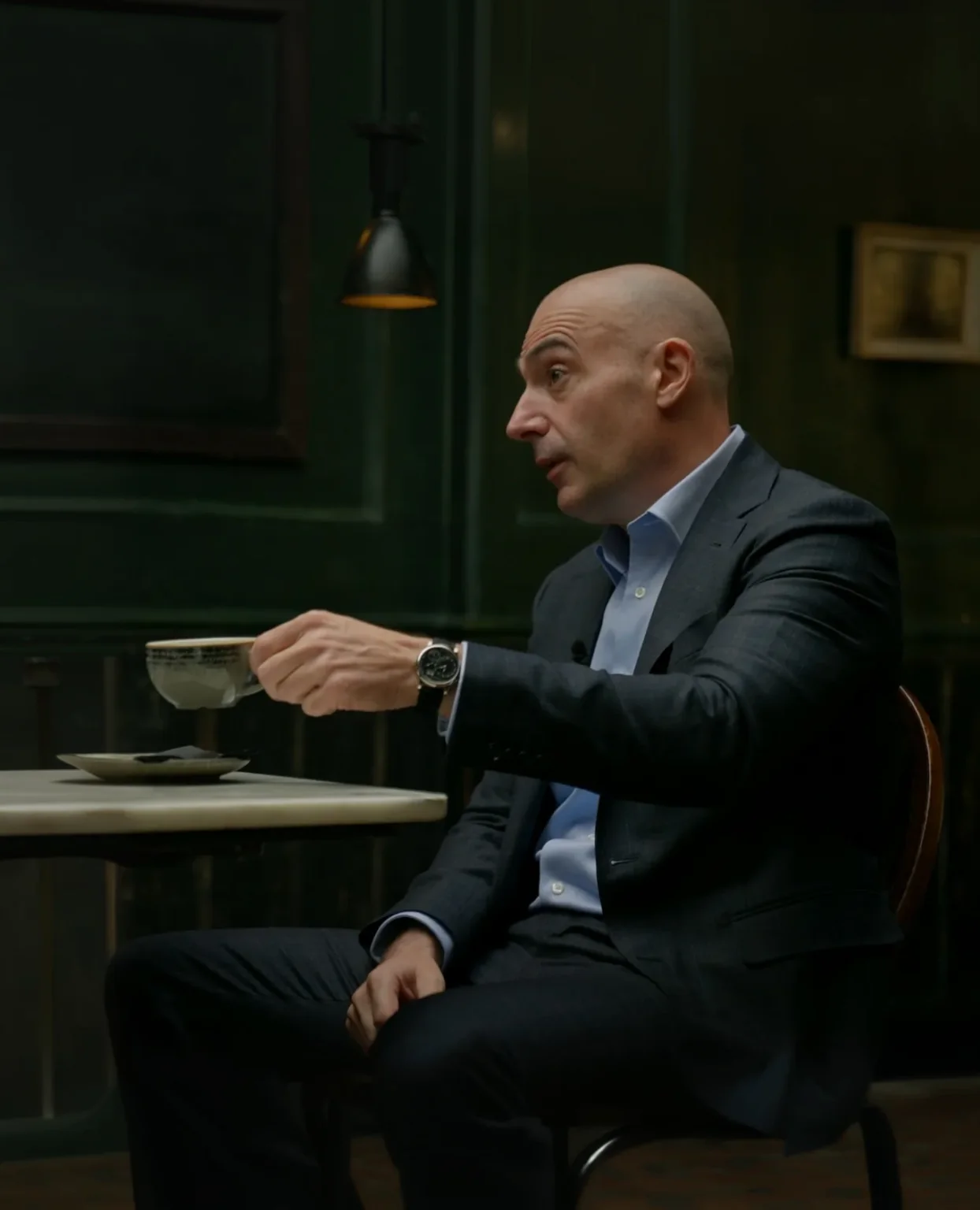
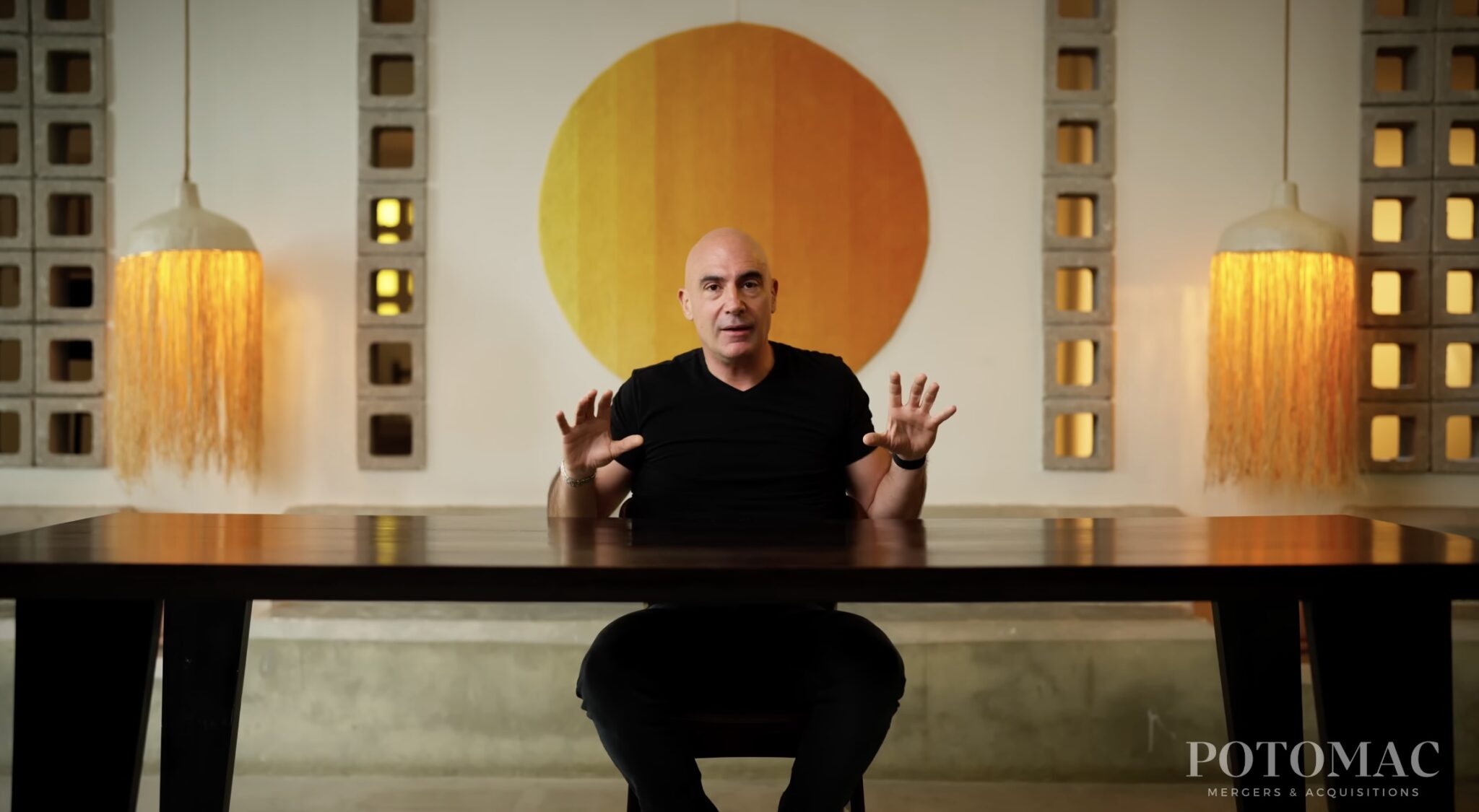
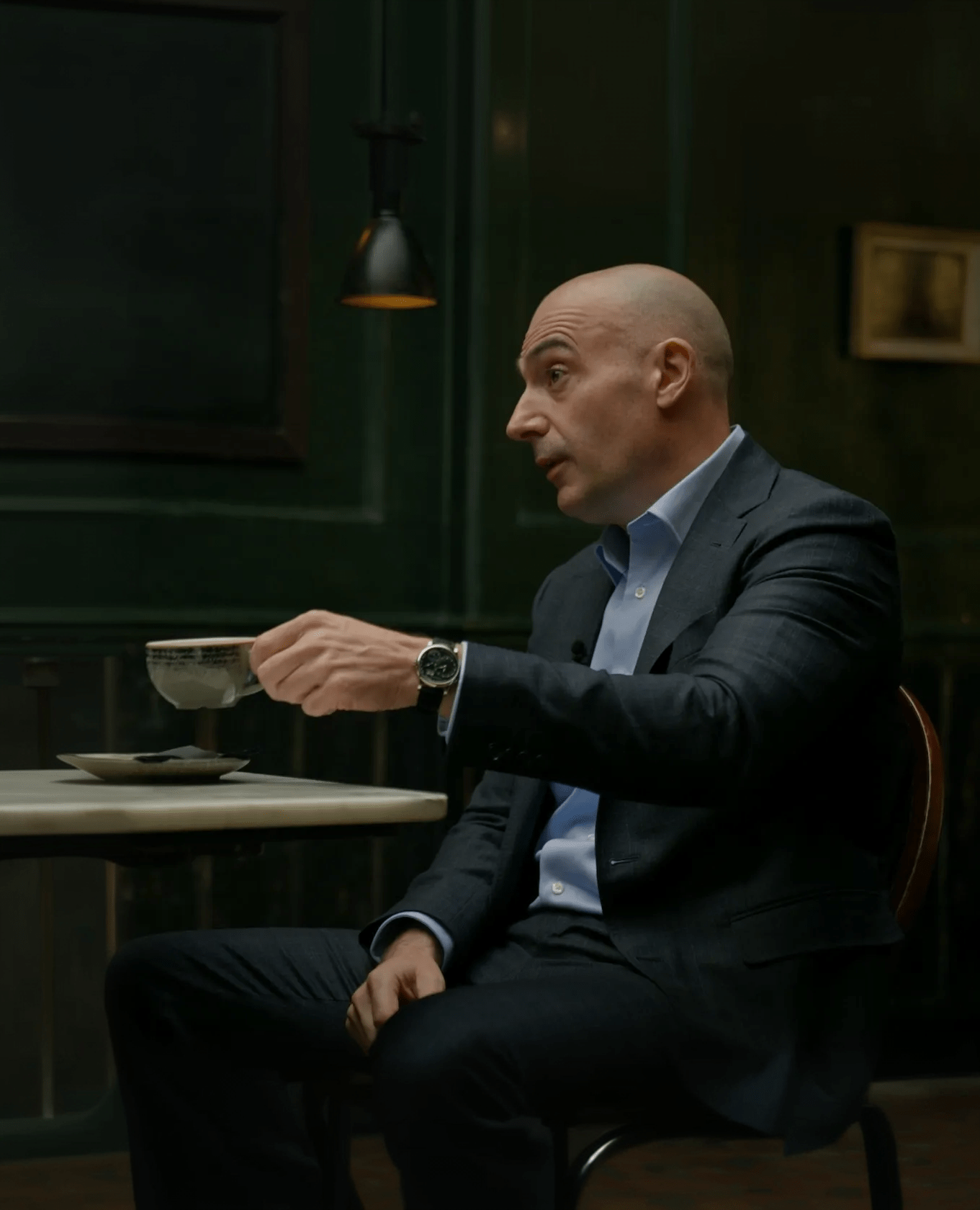
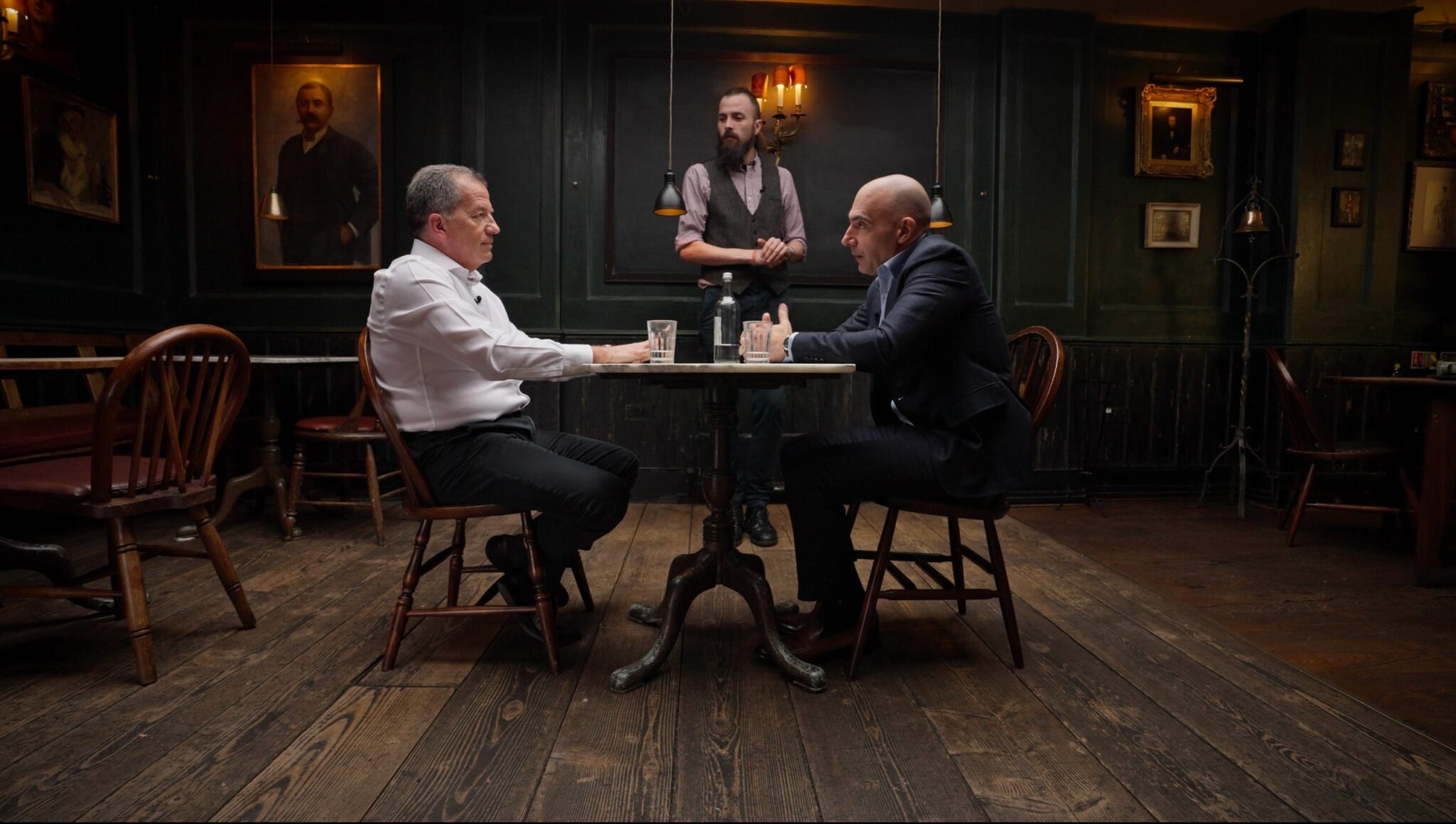
Filmed in London over coffee and a pint at a Guy Ritchie pub, Paul Giannamore sits down with Andy Ransom — the M&A-lawyer-turned-CEO who has spent a decade turning Rentokil Initial into the largest pest control company in the world. Ransom traces the whole arc: a postman’s son from a tiny English village; 22 years at ICI, including five spent in North America defending the company against Johnnie Cochran’s multi-billion-dollar Oklahoma City lawsuit; the accidental landing in pest control that became his “natural home”; and the playbook that followed — relentless execution, a people-first culture, density-driven bolt-on M&A, and a long-term “Cities of the Future” bet. The conversation runs from the just-closed Terminix merger and colleague retention to AI for rats, the case for hygiene, and why he is, improbably, a top-quarter Taylor Swift listener.
Paul Giannamore:
When I started advising pest control companies back in 2003, Rentokil North America was a $20 million business. Fast forward to 2023, and the company has now eclipsed over $2 billion in revenue in North American pest control alone. In addition, over the years, Rentokil’s created billions of dollars in shareholder value, and most recently executed the largest M&A transaction in the space. But this wasn’t an accident, though. This was all executed under the leadership of Andy Ransom — a CEO who likes to keep it simple and execute. 2023 is a special year for Andy. Not only did he just complete the Terminix acquisition, but this year will be his 10th anniversary as the CEO of a FTSE 100 company. Now, the FTSE 100 is the top 100 publicly traded companies in the United Kingdom. And most of those CEOs last maybe five years, but this year Andy’s making it to 10. As I stand here on the coast of Puerto Rico, I think back to the conversations that I’ve had with Andy over the years, and they are by far the most interesting and entertaining. And I think about getting back. You know what? That’s exactly what I’m going to do. I’m going to London.
Non-speech:
[MUSIC]
Andy Ransom:
Welcome to London.
Paul Giannamore:
Thank you.
Andy Ransom:
How was your journey? When did you get in?
Paul Giannamore:
I got in on Friday, Andy, and it’s official now after, I don’t know, a few dozen stops in London over the years. I’m now a crime statistic. I was mugged.
Andy Ransom:
You were mugged? Get away.
Paul Giannamore:
I came out of a posh restaurant, picked up my phone. As soon as I put it to my ear, three punks came. One of them grabbed it and ran.
Andy Ransom:
There weren’t three, really. It was just one.
Paul Giannamore:
Yeah, it was.
Andy Ransom:
You’re already embellishing this story. I know you are.
Paul Giannamore:
No, they nicked my phone, as it were. And it took me — you know, I was with a buddy, and as soon as the phone disappeared, it’s a race to try to turn this thing off. And the thieves weren’t particularly sophisticated. The first thing they did was order a 24-pound order of Krispy Kreme on Uber Eats. Can’t make this up. They did spend 20,000 pounds within the first 15 minutes at the Apple Store before everything was shut off. And I’m still dealing with the aftermath now, but I went over to the Apple Store on Regent Street, got a new phone, and the guy was just like, listen, we see this a dozen times a day in front of this store. And he said, somebody steals from you, you can’t do anything because you become the assailant.
Andy Ransom:
Yeah, well, that is true, yeah. But honestly, it’s a safe city, anyone watching. It’s never happened. It’s never happened to me.
Paul Giannamore:
No?
Andy Ransom:
Wow, I’m sorry to hear that. Wow.
Paul Giannamore:
I think you spent a long day. I’m gonna start with a coffee.
Server:
Black coffee? Any sugars?
Paul Giannamore:
No, it’s black. And a sparkling water, if I can get one too.
Andy Ransom:
Yeah, please.
Paul Giannamore:
Yeah. I’ve known that London’s always been a safe city. I’ve never had an issue. A German friend of mine says don’t wear a watch, hide your money — and you didn’t warn me about the phone.
Andy Ransom:
No, no, it’s a safe city. You just got unlucky.
Paul Giannamore:
I did get unlucky, for sure. Which makes me think of, you know, you at Rentokil — you guys are always talking about safety, right? After this happened, I thought about North America. I can literally think of dozens of companies where the owners and technicians have concealed carry permits to carry firearms. I would imagine Rentokil North America doesn’t allow technicians to pack heat.
Andy Ransom:
I don’t think that’s in the company policy. No. We’re certainly good at killing things, but not that way.
Paul Giannamore:
So when you’re talking about safety, you’re more concerned with falling off the roof or those sorts of things?
Andy Ransom:
For me, I’m passionate about safety, and for a very, very good reason. So, years and years ago, I worked for a chemical company, and the business that I ran was in explosives. And explosives are a dangerous thing. And so when I took over the business, I said, right, safety is going to be the most important thing, and we’re going to have no incidents at all on my watch. And we did. We had an incident — a father and a son working side by side. And there was an explosion, and one of them died. And that had an incredibly profound impact on me as a manager, as a leader. And, you know, I’d started with this, no one’s going to die on my watch, this just isn’t going to happen, we’re going to have a perfect safety record — and then this horrific incident. So it really had a huge impact on me. So whatever job I’ve been doing, wherever I’ve been, whatever business, I’ve always, always majored on safety. And I’m proud to say at Rentokil we’ve got an incredibly good safety record. But as we will say, one accident is still one too many. So every single meeting in the company — board meeting, management meeting, branch meeting, site meeting — starts with safety, every single one. And, you know, I’m incredibly passionate about it, because of that horrific incident about 30 years ago.
Paul Giannamore:
Well, you know, from an acquisition side, you guys are the only acquirer in the industry that, every time we’re doing a deal, you send folks out to do safety audits. You’re looking at signage, you’re looking at the equipment they have, you’re looking at the shoes — you guys come in, you issue all that, brand new company shoes to folks.
Andy Ransom:
Yeah, well, the reason for that is, I’ve long since held the view that if you show me a company that takes safety seriously and has got a great safety record, I’ll show you a successful company. Very rarely do I see companies that are great at safety and they’re not very good at anything else, but plenty of times I see companies that don’t take safety seriously. Well, what else are you not taking seriously? It’s about the most important thing, right? It absolutely is. You know, we want everyone to go home safe at the end of every day. So it’s one of those sort of little litmus tests — what’s the safety standard like? And that’s one of the great things. Well, I’m sure we’ll talk about Terminix in a bit, but I had wondered, well, I wonder what their safety record’s going to be like. And we did a lot of due diligence, and the great thing is their safety standards are right up there with ours. So that was a real reassuring moment for me, when we got to that moment — wow, they’re as good as Rentokil, and we take it so seriously. So, yeah, that’s kind of number one for me, every time: safety.
Paul Giannamore:
You know, one of the things you and I have never really chatted about is, back — I want to say it was 2007 or so. I was not even 30 yet. I decided that I was going to try to raise some money. You guys had bought Ehrlich in North America, and I saw pest control as an interesting business. I’m a young kid. I decide, okay, I’m going to track down Alan Brown. I’m going to send him a letter. So I said, hey, dear Alan, I’m in the process of trying to raise private equity funds. I’d love to buy Rentokil North America. Dropped it in the post, went over to the UK — I was in the US at the time.
Server:
Here we are, gents. I’ve got your cappuccino.
Andy Ransom:
Lovely. Thank you very much.
Server:
My pleasure. There’s your Americano. And there’s sparkling water here.
Paul Giannamore:
Wonderful. Thank you, sir.
Server:
No worries.
Paul Giannamore:
And what I imagine happened is, Alan probably tracked you down and said, hey, we’re starting to make noise and get noticed. The American crackpots are writing us letters. Handed you my letter, and you sent me a nice letter that says, Dear Paul, thank you for your interest. Cheers, guys. Enjoy. Thank you. Rentokil North America is not for sale. It’s core to our business. But hey, by the way, if you happen to find anything interesting for us, we’re happy to take a look at it. Back in those days, you were the corp dev guy.
Andy Ransom:
Yeah, that’s right.
Paul Giannamore:
So you were doing what, I guess, Chris Hunt’s doing today, back in those days.
Andy Ransom:
I was going to resist the temptation. Don’t just say it.
Paul Giannamore:
I was doing it better.
Andy Ransom:
Much better. I was doing it differently.
Paul Giannamore:
That’s absolutely right. So take me back, though — I remember you were at, was it ICR or something?
Andy Ransom:
ICI.
Paul Giannamore:
ICI. So you got your start as an M&A attorney.
Andy Ransom:
Well, I suppose I’ll go back, if you want to go back to the ancient history of my—
Paul Giannamore:
I’d like to go back to a five-year-old Andy Ransom.
Andy Ransom:
A five-year-old Andy Ransom — I’m not sure I can remember that, but I’ll do my best. Yeah, look, I mean, I was brought up in a tiny little village, about 500 people in the village. My dad was a village postman. My parents didn’t own their own home, didn’t even own a car, actually. So I went to this tiny little village school, then I went to secondary school, which wasn’t very good, and then I moved to a different part of the UK where I went to another school, which was even worse than the first one. So I had a reasonably — it was a lovely upbringing, a wonderful upbringing, but a pretty down-to-earth upbringing.
Paul Giannamore:
Unremarkable.
Andy Ransom:
Unremarkable. And schooling was equally unremarkable. I was going to leave school at 16. I hadn’t done particularly well. I’d got a job and I was going to leave, and then one day I discovered that all my friends were staying on to do the sixth form, as we call it, and I thought, well, I don’t want to be left behind. So I went back to school, finished up, and I did really well. Then I went to university, studied law, and I did well doing that. And then I became a lawyer, started in a London law firm, and then I joined this big chemical company. And one thing rolled into another, and I suppose my time at ICI — I mean, I’m a deal guy, I’m an M&A transaction lawyer, and I did that for years and years and years. What I found, though, was that for me, I was a decent lawyer, but I wasn’t a great lawyer. But I was good at the transaction side. I loved the negotiation, I loved the deal.
Paul Giannamore:
You still do.
Andy Ransom:
I still do. I still do. I’m an absolute deal junkie, and I can’t get enough of that. And then, on this one fateful occasion, I was walking down the office one afternoon and I saw the fax machine going. You remember a fax machine? The fax was coming through, and I picked up the fax off the fax machine. And I read it and — oh my God, we were being sued. My company, the chemical company, was being sued. And Johnnie Cochran, who had just won the OJ Simpson case, was suing my company for billions. What the hell? What was this all about? And it was all in relation to the Oklahoma City bombing. 168 people were killed in that incident, the biggest terrorist incident on US soil at that time. And McVeigh and Nichols, if you remember, they were the guys who planted the bomb and caused this explosion. They’d used our chemicals, they’d used our fertiliser chemicals, ammonium nitrate, to create the bomb. And Johnnie Cochran brought this multi-billion-dollar lawsuit. And even though I wasn’t a litigation lawyer, I wasn’t an American attorney, I looked at that and I said, I just want to defend this. This is outrageous. I want to do this.
Paul Giannamore:
You never thought and stopped and said, well, maybe I’m not the right guy to do this, based on my experience?
Andy Ransom:
Well, I’m sure I did. I’m sure I did. On many, many occasions, I probably thought I shouldn’t be doing this. But it was important to me. And so I went to my boss and I said, look, I want to defend this. And he made all the arguments, you know, why it wasn’t a good idea. But I moved the family to Canada. We lived in Canada for a few years, moved to America. And I spent five years defending the company against what was an outrageous lawsuit. And so that sort of took me away from mainstream deal-making. It took me into a different world. I ended up running part of the business when I was in America, came back, I became head of M&A. And then, as these things happen, after a wonderful 20-year history of doing all sorts of things in the company, we were taken over.
Paul Giannamore:
Yep.
Andy Ransom:
And that was the sort of — well, okay, what do I want to do? Do I want to be a deal guy? Do I want to be an attorney? Do I want to be commercial? And there were five of us running ICI at the time, and three of us sort of got together and said, well, maybe we could continue working together as a team. And one thing led to another, and this Rentokil thing came along. Well, no idea what this is about. This came along, and three of us came into the company. So I guess I got lucky, because when I came into Rentokil, they gave me all the stuff they knew I could do, the deal stuff and the legal stuff, and then I and my colleagues started to give me some other responsibilities. And about a year in, I got pest control as the business to run, and instantly I knew what a special business, what a special industry that was. And so it’s quite gradual, my move from deal-making and corporate development and legal and all of that history — I just landed in the right place. And it was such a different business from what I’d been used to. That was about coming up with product and selling great product. This was all about people. And that was the minute I knew — wow, I’d found my natural home. This was a real lightbulb moment for me, a very different type of business.
Paul Giannamore:
Well, you know, look, Rentokil was a very different business then than it is today. When you came on board, I think that was around the time of the CityLink troubles, right?
Andy Ransom:
Yeah. Excuse me — good coffee. Yeah, that was the back end of the CityLink parcel carrier. Loss-making business, losing 50 million pounds a year, I think it was.
Paul Giannamore:
Didn’t you guys sell it for like one pound and the assumption of debt or something like that?
Andy Ransom:
Well, we sold it for one pound, and we never got paid the pound. So I’ve got a long memory.
Paul Giannamore:
You didn’t hire debt collectors for that?
Andy Ransom:
No.
Paul Giannamore:
No, no, no. So when you came on, kind of in the mid-2000s — I mean, could you have imagined back then, obviously Rentokil’s a very different business now, but if you think about the Andy Ransom that was doing corp dev and a variety of other things versus where you are now, at the helm of what’s one of the largest service organizations on the planet, really — I mean, did you imagine that you and your team could potentially take Rentokil to such scale?
Andy Ransom:
Well, it’s a difficult one to answer, because did I actually sit there and envisage that that’s what we’d go on to do? No. But would I have thought there’s any reason we couldn’t do it? No, I didn’t. You know, what was really clear was that the pest industry is an incredible industry, and Rentokil had a fabulous position within that. And it had pockets of brilliance, and then pockets that hadn’t really been looked at and nurtured for many years. It hadn’t really had the investment in technology. It hadn’t really had the investment in innovation. But at its core was this kernel of brilliant people, passionate people that had been in the industry for years. And so there was definitely really good raw material to work with. I think — I’m not saying we invented density, but once we really sat and modelled density, and how do you create dense networks, that was a real lightbulb moment. So, okay, that means we can do lots of incremental bolt-on M&A. They don’t have to be national, international. They don’t have to be big. If it’s a good-quality business, could that enhance the density in a town or a city and really add to the profitability? And that was a real moment. Once you realised that, and you had the basic raw materials of good people, good position, good brand, and then you could make those investments in technology and in innovation — well, that became the reality. That became what the plan was, the right way to plan, as we call it.
Paul Giannamore:
Is that around the time — I mean, in prior years, obviously, there was CityLink, there were these big hygiene businesses. Rentokil was not a majority pest control company when you came on board. Not at all. Did you guys look at the portfolio and say, well, wait a second, pest control’s highest margin, high visibility on cash flow, capital light, we need to focus there — thought through the density thing? When was the active decision made to say, you know what, let’s become a world-class pest control organization?
Andy Ransom:
We did a little exercise, and it was based on Bain Consulting’s four-box grid. I think they came up with it in the 1950s. So this is not really, you know — cash cow.
Paul Giannamore:
Exactly, all of that.
Andy Ransom:
So, I mean, one of the first jobs I was given was to come up with a strategy for the company. And I’d not really done a lot of strategy work before, but I thought, well, I’ll never ask.
Paul Giannamore:
Find Johnnie Cochran.
Andy Ransom:
Exactly — I’ve been too busy doing other things. But I took the Bain four-box grid, and we sort of worked out, well, which of the businesses we shouldn’t be in here at all? Which of the businesses are low margin, low growth, and really haven’t got any great potential? And they’re the ones we need to get out of. Which of the ones that actually have got all the right raw materials? And pest, as you say, good level of growth, good margin, the ability to roll up into something much, much bigger, the ability to make a step change in investment in technology and innovation. So we put that in the top right. And then hygiene — which, if we had more time, we could talk a lot about hygiene. Hygiene is actually as good as pest control.
Paul Giannamore:
I’ve heard you almost say hygiene’s the new pest.
Andy Ransom:
I have said that, because it’s growing as quickly, its margins are slightly higher, its customer retention rate is even higher. So you’ve actually got the same — again, it’s a density play. So it was quite clear the businesses we should deprioritise, and then it’s quite clear the ones we should prioritise. Now, the question — and I was like a ball for Britain on this subject — it isn’t about the strategy and it isn’t about the plan. It’s about execution. And anyone who’s ever worked with me or hung around me long enough knows that that’s what I major on. A half-decent plan that you execute the living daylights out of will always give you better results than the perfect plan. So it really is about execution and making sure that you deliver on the commitments you’ve set out to deliver. So I can go back and I can look now for a decade of three-year plans. Where do we think we’re going to be in the next three years? And then roll it forward another year, roll it forward another year. I think we’ve beaten the plan every year over that 10 years. That’s not trying to sound conceited. It’s trying to make the point that if you execute the plan, good things happen. But for me, the whole magic sauce — and this is how I feel, but I also know it’s how the pest industry feels — for me the whole model is about people. It starts and finishes with people. So the technology is good, and the brand’s good, and what you do on the web’s good, and innovation and all that. Somebody asked me — I was on stage at one of our events, and there was a comedian there, and he was trying to have a bit of fun with me, which was fine. It was in front of 330 Germans, and a German stand-up comedian asking me questions and then translating the answers into German. Half the audience were really enjoying it, the other half were cringing like that. And he said to me, he said, you’re a CEO. He said, it’s not even a job. What do you even do? And I thought, this is a bit awkward. What do I do? What is the job? And I came up with this terribly lame answer. Lame, but sort of true. I said, I’ll tell you what my job is. I’ve got to get 58,000 people out of bed every morning. I’ve got to get them to work. I’ve got to get them to do an amazing job for their customers. I’ve got to get them to do it safely. Without supervision, on their own, I’ve got to get them to do it happily. Then I’ve got to get them home again, in the hope that they come back to work the next day. And it was a really lame answer. But in that little anecdote is the kernel of what I think the business is all about. If you can find good people, engage with them, inspire them, give them good training, encourage them to develop their careers with you, stay with you longer — good things happen. And that’s the key to execution in a pest business and a route-based business. So that’s really what I’ve majored on. If anything else about the last 10 years, what do I think I’ve done well or haven’t done so well — I would say working on culture, working on people has been the most important thing that I think we’ve done at Rentokil. And I’m very, very proud of what we’ve achieved there.
Paul Giannamore:
You don’t just talk the talk. I mean, you guys have won so many best-workplaces awards, which is really quite surprising. It’s a pest control company — how can it be such a great place to work? So what are some of the things, what are some of the initiatives that you guys have done over the years to really make sure you’re putting your colleagues first?
Andy Ransom:
I came up with this thing — well, I didn’t come up with it. When I worked in America, my old company had a project called Employer of Choice. And I thought, well, I quite like the sound of that, Employer of Choice. That means people want to come and work for us. So we sat down and did a lot of work with our colleagues and said, well, why do people want to come? Why do they want to stay? What is it about the job, and what is it about pest control? What is it about Rentokil that caused people to want to stay? So we put a whole programme — it’s less about initiatives and it’s about creating this culture and this nice place to work. People say to me, what’s it like at Rentokil? And I always say the same thing. It’s a really nice company. It’s nice people. Nice is very much underrated. So we’re trying to create this warm, collegiate, supportive environment, where we help each other. And that goes an awful long way. But there’s a very hard-edged side to it as well. We measure a lot of things. I can tell you we’ve got 2,000 branches around the world. I can tell you — don’t ask me, but you’ll test me out — but every single branch around the world, how many vacancies we’ve got in each branch, in each role, how many people have applied for that job, how many days has it taken to fill that. And we track that. We’ve been tracking that for years. So you can see trends in any city in the world. So you can actually see, is there a problem in the Shanghai branch, or — no, it’s always been challenging, it’s the same in the Bay Area of San Francisco. So the combination of a supportive culture, where we spend a lot of time, effort, money on training, we promote from within — we really try not to hire from the street, we promote, every time there’s a vacancy, promote from within — but also we track and we trace KPIs over a long period of time, so we can see, are we improving. We’ve invested a huge amount in training, frontline training, management training, so we’re investing in people. Those are the things that we’ve done. I mean, you said quite rightly, we’ve won awards. We won, indeed, the award for the best employer in the United Kingdom, and Apple came second. So how does pest control do that? It’s really by working on that culture. We’re trying to be a good, supportive, nice place to work.
Paul Giannamore:
I hear it a lot. I mean, a couple of months ago, I was having a beer with Chris, and I said, why don’t you leave? You know, the UK is cold, it’s dreary. Taxes. Why don’t you leave that place? Go to the Cayman. Pay no taxes. Make more money. And he said, you know, Rentokil’s really a lovely place to work. I just couldn’t see myself anywhere else.
Andy Ransom:
You’re trying to tap up my people.
Paul Giannamore:
I’m just, you know—
Andy Ransom:
Steady now. I like to test the waters just to see what’s going on. Yeah, and one of the nice things — and again, it’s back to execution. If I look at my team, the global team around me, there’s an awful lot of longevity. People have tended to build their careers here, and they’ve tended not to move on. Now, you can argue that sometimes they should leave. One or two times you’d say, well, it would be good if somebody moved, because then it allows someone else to come through. But if you’ve got a business and you’re trying to do, as we are, a consistent execution model, having people that have been doing it for a number of years — and you’d see this typically in the industry, people who stay in the industry — is really, really helpful for that execution. Having people that have been with us 10 years and know what they’re doing, they don’t need a lot of interventions, certainly makes my job an awful lot easier. But it also means the reliability of that execution is so much higher. Maybe you lose a bit of the margins, because you’ve not got the latest thinking from somebody joining from outside the industry, but I do think that counts for a lot.
Paul Giannamore:
Well, I think that’s a great case study in juxtaposing Rentokil with Terminix, right? There was a lot of new people all the time from outside the industry, with a bunch of brilliant ideas every 18 months. When I think about Rentokil North America, you know, you hired John Myers. He’s been at the switch now for how many years? 14. Okay.
Andy Ransom:
14, 15 — 14 and a half, came out.
Paul Giannamore:
Did you hire John?
Paul Giannamore:
Okay. Yeah, you came out a year before he did.
Andy Ransom:
That’s right.
Paul Giannamore:
So you hired John. You know, when I look at what Rentokil has done versus like an Anticimex — Anticimex, I think, made an error, and this is my opinion, in the North American market, by sending a Swede over. A brilliant guy, but very culturally different. And I think a lot of foreign companies — a lot of American companies make that mistake, sending Americans over, and vice versa. But was that a specific decision, to hire an American to run an American business? Or did it just work out that way?
Andy Ransom:
I think it just worked out that way. John was the right person at the right time. But what’s interesting — 14 years ago, our revenue in North America would have been a couple of hundred million, something like that, 250 maybe. And I think we’ve grown — John’s grown, the business has grown, but the management team has grown tremendously as well. And I’m not a big student of business. I don’t read a lot of business school stuff, but I do remember reading, years and years ago, Jack Welch, GE. And he said the key to being a successful leader is, surround yourself with people who are better than you, and then get out of their way and let them get on with it. And that’s more or less what he said. And that’s really my management philosophy. So my predecessor — you mentioned Alan — Alan was a bit more central command and control. I’m a little bit more laissez-faire. I don’t think people would recognise that description of me, but I don’t try and do John’s job for him. I hold John to account, and then John surrounds himself with a great team, and that team has evolved over the years as well as the business has got bigger. And then, with the wonderful merger with Terminix, we’ve now got an even bigger, more impressive North America team. So no, we didn’t set out and say, right, we need an American because it’s America. But I think he’s the right person, and has done a super job over the last 14 years. I’ve worked in Canada and America, and they got used to the accent. They figured it out eventually.
Paul Giannamore:
Speaking of the Terminix acquisition — at what point in time did you make the decision in your mind, I’m doing this?
Andy Ransom:
I first looked at Terminix over a decade ago, when they were owned by CD&R. I went to New York — I can’t remember the year exactly — but I went to see CD&R, and I took a look at it. We couldn’t afford it, and CD&R wanted to do the float in any event, but it was the first time I looked at it. I see it as part of my job to know what the competition is doing, so it wasn’t just Terminix we were looking at, but I’ve looked at Terminix many times over the last 10 years and tracked them very carefully. Known most of the senior management over there from one time or another. A few months into Brett’s tenure, that really was quite a green light for me, because my biggest worry — when you put two big businesses together, there’s two reasons why big mergers go wrong. One is cultural misalignment, and the other is poor execution. So I didn’t know Terminix well enough to know whether the cultural alignment would be as it needed to be. And I knew Nick, and I liked Nick, and I knew him over the years, but I wasn’t sure what the culture under Nick was. But I started picking up intel, rumours, whatever — that under Brett, it sounded like we were drinking from the same fountain, or whatever. He uses different terminology to me. He talks about servant leadership. Without knowing it, that’s always been my model as well. So I started to hear things, in one sense good things about Terminix, in another sense worrying things, because I kept thinking, well, if they execute — are they finally waking up? Then they’re going to get away from us. And so I really liked what I heard about Brett and the team that he’d put together. So I suppose it was a few months into Brett’s tenure that I started saying, okay, there have been discussions in the past, so I knew a lot about the company, but the bit I didn’t know was how that culture fit would go. And that’s been fantastic. So that was, for me, the bigger thing I needed to understand. Were we coming from the same — we’ve both been around 97, 98 years, the companies have got very similar history — but was there a danger of a big misalignment? And once I got comfortable, no, actually, quite the opposite, quite the opposite. The culture fit has been astonishingly good. And a lot of that is due to the 100-year history. But a lot of it is also, for the last couple of years, what Brett and his team have been trying to do. So I suppose that’s when I really started looking in earnest again. And, of course, it was COVID, it was the pandemic, and we couldn’t meet. We were doing it all through videos. And eventually I said, well, we’re going to have to meet here. And the United States of America wouldn’t let me in. So we had to meet up in Toronto, in an airport hangar somewhere. So that was when we met. So it was — well, two years ago now.
Paul Giannamore:
Under Brett, he really focused on retention of employees. And there was the kind of Terminix turnaround playbook, where he wasn’t going to go out and just buy a bunch of stuff and do what folks in the past have done. I mean, is Brett’s playbook still in play now, as part of Rentokil with the Terminix organization?
Andy Ransom:
It is. Yeah, it is. I mean, it’s one of the neat things about the merger — arguably the neatest thing — because, you know, being a deal guy and having done a lot of merger-type activity in my time, quite often the financial case for the merger is made out of synergies and savings. It’s all about how many heads can you cut. This was different. This was Terminix, with the leading residential and termite brand in North America, with a big position in resi and a big position in termite. And then here’s Rentokil, who’s got the leading global position in commercial, with a big brand in commercial. So you’ve got this incredibly complementary fit. And as we’ve gone into it, bringing the businesses together, Brett’s position has been, hey, we’re not going to try and tell you we think we know how to do commercial better than Rentokil. Let’s just take the Rentokil playbook, and we’ll adopt that. And to a greater or lesser extent, we’ve taken a very similar position with resi and termite. In termite, we were always small. And resi — it’s only in America we’re big in resi. Outside of the United States, we do some resi here in Australia and a few other places, but it’s not as big a market. We’ve always been the commercial outfit. So by playing to each other’s strengths, and letting the natural leader lead the playbook, as you put it — yeah, absolutely. So the answer is yes, we’re working very hard, and we’re trying to do best of breed. We’re trying to say, yeah, but have we got some stuff that we do that’s better? Yeah, let’s bring that in. And have they got some stuff? So we’re trying to make sure we mesh the best of both. But the Terminix playbook under Brett is absolutely what we’re implementing.
Paul Giannamore:
I can imagine. You know, you mentioned the brand. I mean, clearly in North America, Rentokil has, for over a decade now, been an amalgamation of a variety of local brands. Of course, Rentokil the name is not nearly as known in North America as Orkin and Terminix. So I’ve got to imagine that the brand was an important aspect of this acquisition for you guys.
Andy Ransom:
Yeah, look, for me, it comes back to what I was saying earlier in philosophy. It was about people. And so you mentioned colleague retention. If I had a single thing that caused me to worry about putting the two organizations together — and I’d get asked this all the time by investors, you know, what keeps you awake at night, what are you concerned about — colleague retention is the single one that I would put up there. Because, back to my terrible story about a German comedian, if you can’t get people out of bed in the morning to come to work, or if you can get them to come to work and then they leave you again in the next six months, that’s a really difficult hand to play, no matter what industry you’re in. So that for me was really where my focus was — much less about brand and all the other things and synergies. I knew those would be good. And the question was, could we, together, address that and make that better? And I’m feeling really, really good about that. So the brand was — yeah, it’s a wonderful brand. It’s got the best brand recognition in pest control of any brand in the United States. But yeah, no, it’s a power brand, as we call it.
Paul Giannamore:
How have the folks out in the field, the frontline colleagues — I’ve dealt with this over recent months during the integration. I mean, have you had any retention issues? Anyone, you know, waves of exodus, because I don’t like Rentokil, or I don’t like Terminix, or—
Andy Ransom:
No. It is funny, though. It’s a funny old industry. I suppose all industries are the same. I had one of the investors, about three, four months ago, saying, oh, we hear people are leaving the company. And I go, well, where are you hearing that? And, oh, well, you know, we’re hearing it, we’re hearing it. And I tracked it down, and it was like six people. Six people that we’ve invited — made available to the market, as they say. No, it’s been good. It’s been really good. So colleague retention is up in both businesses, and that takes some saying. So frontline colleague retention has improved — needs to improve further, but that’s improved. Management retention’s great. Obviously, you do have to make changes when you bring big businesses together, so some people have had to leave the company. Some of that has been voluntary — most of it’s been voluntary — but nothing out of the usual. So no, I’m actually delighted with where we are in colleague retention. But it’s still one of the biggest opportunities — to get the overall frontline colleague retention across the combined business up to the sort of levels that we want it to be is probably the single most important focus for me over the next couple of years.
Paul Giannamore:
How have you dealt with the harmonization of comp structures across—
Andy Ransom:
Carefully is the answer.
Andy Ransom:
Yeah, well, where we’re at the moment is, we’ve done a lot of work on the benefits piece. Outside of America, people don’t know what I’m talking about — you all know what benefits are, but we don’t use that language over here. So with things like medical and dental, things like paid time off, all of the ancillary benefits, we’ve done a big piece of work, and we’ve moved on that already. So we’re well on the way to harmonizing benefits. We mentioned safety. We’ve done things like — I mean, they may seem like small things — but safety shoes. So Rentokil colleagues had safety shoes, Terminix colleagues didn’t. Of course we’re going to give everyone the same — the same with bee suits and other equipment. So we’ve moved on those sort of ancillary things. Pay plan is in scope, but the answer to that question is, carefully. You don’t mess with pay plans in route-based businesses and pest control without a lot of care and attention and thought. So we will be moving, and we will be moving to a single pay plan, but we’ll do it carefully. We’ve got a pilot going. We’ll get through that. We’ll learn from the pilot. We’ll make some changes, and we’ll move. But we’re on track for where we expected to be. We’re not behind plan, but we’re not rushing that. We’ve got to get that right. So, yeah, you’ve got to take care of it.
Paul Giannamore:
When you think about the fact that you guys own a huge chunk of North America now — you know, since the acquisition of ERC, and more acutely starting in around 2012, 2013, you guys have been on somewhat of an acquisition tear, particularly in North America, right? And I would imagine—
Andy Ransom:
It’s not been bad for you, Paul.
Paul Giannamore:
It’s been great. That’s why, after our coffee at the end of the day here, I’m buying you the pint this time around. Champagne. You guys are going to be more selective, I would imagine, going forward in North America.
Andy Ransom:
Yeah, look, I think, as you say, we have been doing a lot of acquisition. We’re not the only ones, of course. Our competitors have. Private equity has gotten very busy in that space. But we’ve got a lot to do in the next two to three years. We’ve got a lot to do to integrate across the two businesses, and that’s going to keep us busy. But we’re pacing ourselves. We could rush this. We could say, right, I’m going to crash it together in 18, 24 months. I don’t think that would be a good plan. So we’re going to take 36 months to put them together. Now, at any one point in time, that may mean that certain different parts of the business are cup-tied — they’re just going to be so busy on that that we really shouldn’t give them something else to do, like integrate another business. On the other hand, big chunks of the business will either already have been integrated, or not yet slated for integration for another 12 months, which means we’re going to have opportunities. What I’m not going to allow to happen — if there’s a must-have asset out there, and it’s an asset that we’ve prized for years, and we’ve been working on it for years, I’m not going to let that — I’m not going to miss out on that. Because once it’s gone, it’s gone.
Paul Giannamore:
But if it’s acquired by a financial sponsor, then you’ll get another shot.
Andy Ransom:
In which case, we’ll make an appointment now, and then come see us in three to five years’ time, I guess. But if there are — and we all know that sometimes they’re more sort of nice-to-have. Yeah, that’s a good business, but it doesn’t tick all of the boxes. We’ll probably pass on some of those, in the towns or the cities where we’re already incredibly busy. Must-have deals, we’ll do. Now, if a must-have deal comes right on top of an integration, we’ll just incubate it. We won’t integrate it. We’ll run it as a separate business for a couple of years, and then we’ll come back and integrate it in a couple of years’ time. And then the other thing, of course, is we’re in 93 countries around the world — 92 at the moment — there’s some Terminix integration in a few markets: Ireland, Sweden, Mexico, Honduras. But the vast majority of our markets, we’re totally open for doing acquisitions. So probably means we’ll do a little bit more outside of the States, outside North America, and a little bit more in hygiene and well-being, while we’re giving ourselves a little bit of space in the States. But as I say, I’m not going to miss any must-have deals in the US.
Paul Giannamore:
But you’re kind of running out of inventory, so to speak. I mean, there’s a scarcity of premium assets now in the pest control space. I know they regenerate and all that, but between Anticimex and Rollins and Rentokil and now the financial sponsor season, there’s not — I have these conversations with Alex all the time about the fact that, even in North America, you’ve got some old businesses, you’ve got some interesting ones, but you don’t have the supply of quality assets that you once had just a few years ago.
Andy Ransom:
Yes and no. I mean, I think you’re right. Certainly at the top end — and we all look at the PCT 100, right? So at the top end of the PCT 100, there’s been an awful lot of activity, by definition. If you look at the bottom end of the PCT 100, the smallest company in the PCT 100 is still significantly bigger than it was a few years ago. So it is regenerating. And many of the smaller ones will go on to be medium-sized ones, and several of the medium-sized ones will go on to be great-quality companies. The other thing that is worth remembering is, the vast majority of companies that have come into the Rentokil family, when they were trading on their own, were probably doing 10% operating margin. And when they come into a network like ours, or our big competitors’, you still get a big opportunity to increase the margins, just because of all the density factors. And so they don’t have to be the biggest. They don’t have to be operating at the top of the pile. They just have to be a good business with good people, good customer base. And so there’s still plenty of runway. But I agree, by definition, a lot of deals have been done that won’t be available to be done. But there’s still an awful lot. You’ve still got 18,000 to 20,000 pest control companies in the States. And that’s after a decade of consolidation. So I’ll continue to be busy.
Paul Giannamore:
I think you’re all right. If that was the purpose of your question, I think you’re all right for a few years. I just needed reassurance from you, Andy. You’ll be all right. You know, since you’ve come on at Rentokil, you guys have focused on innovation and technology, I think, more so than any other player in this space. And I’m not just talking about tech-enabled pest control. I’m talking about — I mean, I remember back when we did the VDA deal. That was the vector deal. And I remember sitting with John and sitting with Alex, and we spent a couple of months going over it. And John didn’t want to do that deal. You did. And they got the scientists and the lab coats. They had very differentiated capabilities, and it put Rentokil on the map as basically the largest provider of vector disease control in the world. In addition to that, most recently, we did that deal in Israel. So, you know, we talked about gun rights — let’s talk about the Palestinian-Israeli conflict. So you guys officially entered Israel via an IPM business, which I got to spend a lot of time over there looking at — his AI-enabled optics and all the things. What is it with you and innovation and technology? And where do you ultimately see yourself taking this business over time?
Andy Ransom:
Let me split that into two, because I think technology is not necessarily the same thing as innovation. So let’s start with tech. I like to try and keep things simple, because I’m genuinely a simple guy.
Paul Giannamore:
I’m a small village.
Andy Ransom:
All of that, exactly. I’m giving you the sob story. We’ll move on. But so I say simply to my team, why are we investing in technology? What’s the reason why we’re doing this? Keep it simple. We invest in technology for one of two things. We are either trying to make it more efficient, more effective, lower cost for us to provide the service to you — so anything that we can do in the back of house that doesn’t negatively impact your service but can lower our cost to serve has got to be a good thing, and that’s a margin play. More excitingly is any technology that we can use to give you, the customer, a better service. If we can give you a better service, and ideally a service for which you value as a premium service, then that’s even better. So if it doesn’t meet one of those two criteria, we’re not doing it — unless it’s making us more efficient, or it’s giving us something neat and cool and innovative to sell to customers. On the innovation side, the thing with pest control — it is a wonderful — I always say it’s the original subscription business, before subscription businesses got trendy. It is the gift that keeps on giving. If you’ve got a contract with your customer, if you deliver great service, if you keep them happy, keep them pest-free, solve their problems, be easy to deal with, be nice, be transparent with your billing, then they should be staying with you. They really should be. So now, that will only take you so far. The question is, okay, if you want to keep growing — for us, we think that the differential is innovation. Innovation is the lifeblood of organic growth. That’s our view. Either we’re coming up with new things to solve existing problems, or we’re coming up with new things to solve new problems. And so that’s our view. Now, increasingly, that is a lens that you’ve got to put over the business in terms of sustainability — non-tox, chemical-free, low energy consumption. You’ve got these big themes now that, again, my view is, if you’re not innovating, you’re dead. And so some of it is responding to what is happening in the big wide world. Some of it is trying to lead the industry. And we are now, by far and away, the biggest player in the industry. And with that comes a responsibility. And we think we’ve got to do some things differently in the industry, and for the benefit of the industry, and some of that is to find new solutions which are less burdensome on the planet. So for us, innovation — I will say innovation is not a product, it’s not a process, it’s a state of mind. Innovation is, are you open to new ways of working, new ideas? And whatever your job in the company is, are you open to that? In fact, we encourage you to innovate, and then share it with the rest of us. And even when it’s been a failure, please share it with us, because we won’t then copy it somewhere else, because we know you’ve already tried it. So I think innovation really is very, very important. You talk about the Israeli deal — I was asked to do an interview with the Financial Times about three weeks ago. I read the article. Well, yeah, but the interview was nothing to do with that. The interview was all about M&A. It was all about, tell us about deals and tell us about Terminix. And at the very end of the session, the journalist said, is there anything I should have asked you? And I said, perhaps you could have asked about the most recent deal we did in Israel, and mentioned artificial intelligence for rats. And he said, what? Tell me about that. And I told him a little bit, and the story became front page of the FT on the weekend. And then Sky TV called up and wanted an interview. It was in The Guardian. Yeah, it was sort of everywhere. It just sort of makes a point, really, that I think people are interested in the latest technology, and people tend to think pest control is not very innovative. Well, there’s a lot of innovation going on in that space. Now, whether you can monetize facial recognition for rodents, that’s another debate for another day, but the fact that you can do it, and it will tell you about rodent behaviour — and we all say it means pest control, but pest prevention is far more important than pest control. If you can prevent the problem before it becomes an infestation, by seeing early where the issue is and where it’s coming from, then you’re going to be a better pest controller. So I think innovation is incredibly important, but some of it we do for a bit of a halo effect, to be the innovator, and some of it we do really to come up with the solutions for the future.
Paul Giannamore:
You have your innovation centre here in the UK, and I understand you’ve got plans to build one in Texas. Is that right?
Andy Ransom:
Yeah, we haven’t quite announced it, but we just have now — in Dallas.
Paul Giannamore:
Congratulations.
Andy Ransom:
Thanks for that, Paul. So yeah, we’re going to open an innovation centre for residential and termite, based in Dallas, and then we’re going to have an extension of that in Mobile, Alabama, for termite.
Paul Giannamore:
And so what does the innovation centre do? Is it a bunch of scientists tooling around with, you know, mixes together?
Andy Ransom:
You’ve never been to one, have you, Paul?
Paul Giannamore:
You should come to our— Malcolm invited me out this time around, and I just hadn’t had the opportunity to do it. And I skipped the innovation centre visits when Ronan was doing that, back in—
Andy Ransom:
A lot of what we’re doing is observing animal behaviour. If you can understand the behaviour of, in this case, the rodents — it extends also to termite behaviour, etc. If you can understand their habitat, understand where they live, what their patterns of behaviour are, then you can start to anticipate, from a pest control, pest prevention point of view. So in the UK one, we have lots and lots of rats and lots of mice, and we’ve got the largest collection of insects in Europe, and then we’ve got a mosquito room, we’ve got fly rooms, so you’re testing every ILT — insect-light trap — on the market. So we test our competitors’ devices, we test our own innovation, so we’re trying to make sure that we can stand behind the claims that we make from an efficacy point of view. It’s where the regulatory team sign off that it meets all the regulatory standards and obligations. So yeah, we have PhD scientists and technicians. The one in the UK — we’ve based that where we also do a lot of our frontline technician training. So we get the techs come in, and they have great fun learning, but they also tell our scientists, hey, you don’t suppose you’ve got a solution for this, have you?
Paul Giannamore:
And so we get some of the ideation coming from the front line. The frontline pragmatist versus the—
Andy Ransom:
Yeah, that’s all very interesting, but have you got something — yeah, right — which is where tracking gel came from. One of the techs said, you know, we all go in there and we’ve got this blue light and we’re checking it, and we came up with this because one of the techs said, why can’t you come up with, like, a tracking gel, so we could see exactly where they’ve been and just shine a light on it, that sort of thing. But I was in our tech centre about four years ago, and I was talking to the guy who was in charge of it, and he was incredibly excited, and he said, you won’t believe this. He said, we’ve worked out that fleas are attracted to a certain spectrum of light, and here’s the spectrum. And I’m like, well, it is impressive. I said, can you tell me how much work we do for flea control? And I sort of burst his bubble. No, we don’t really. There’s not a market. And so I have to be the miserable guy who says, no, we’re not doing that, because we’ll only invest in things — back to, can it lower our costs, or is it going to represent an exciting market opportunity? There’s so many cool things that the scientists have come up with that we’ve said the market’s not big enough for that, we won’t make enough money. But so we have to have this very hard-edged commercial side to decide, what are we going to work on? But that would be the same idea in the new facility in the States, but we’re going to focus there on resi and on termite. And so over here in the UK, we’ll focus on the commercial side. We’ll keep the rodent centre of excellence here in the UK, and we’ll be working more on flying, biting, crawling insects in the States.
Paul Giannamore:
It was interesting doing the Israeli transaction, but it made me start to think about how you guys grow around the world. You know, you’ve got pest control and your other business lines. It appears to me that you try to identify a country that, although it may be a little bit premature today, it’s got some promise. And you want to plant a flag there. Even if you, I don’t know, make up a small country out in the middle of nowhere, you buy a small business there, and now you’ve got Rentokil, and you can grow as the economy grows and develops. Is that kind of your philosophy? Or how do you identify markets?
Andy Ransom:
It’s a good point. I mean, I mentioned earlier, we are in 93 countries. So there’s really two sorts of — maybe three — acquisitions we look for. Keep it simple to start with. The first one is density-building acquisitions in the cities. And it’s very much a city-based game. And you shouldn’t think in continents or countries, think in cities. When we went into Brazil, we went into the top three cities, rather than trying to get pan-European, pan-Brazilian coverage. So the first one is, if it’s a city we’re already in, can we find nice bolt-ons, because they give us density? And that’s wonderful, so that’s the easiest, if you like. The second one — you talked about planting flags — so we have this thing called Cities of the Future. And we’ve worked out — guessed, worked out, not sure — which of the cities are going to be megacities in 2050. Which of the countries that we think are going to have differential growth, but within the countries, which of the cities that we think are going to have differential growth? Because I pretty much can guarantee, if you can show me a country with really good GDP growth, I can show you cities will be growing faster than the average GDP, and I can show you that pest control within those cities will be growing faster than the city GDP. So you’ve got real opportunity for growth. So for those countries, we’ve got the list of the cities that we want to go after. Now, within those cities, can we find the best pest control company, or the second, or the third best — but not the 50th best? Can we find someone who’s really, really good, that’s got that local reputation? They’ve probably been doing it for a few decades. If we can win that, we probably then change it to the Rentokil brand name. And then we go back to category one. Okay, now we’ve got the first one, can we get the second and the third and the fourth within that area? Because now we’ve got density. If we’re right — we won’t be right every time — by 2050 we’re going to have an incredibly profitable and very dense set of operations in a bunch of cities that, frankly, in 2050 will be very well known, because they’re megacities, whereas today they’re not quite as well known. Which means it takes us into some territories that some other people will feel a little bit more queasy about. We’ve just gone into Pakistan. I used to run my old business, my old company, in Pakistan. I know the country well. Pakistan as a market is not for the faint-hearted. We’ve gone into Lebanon, and we’ve gone into Argentina, and some of these will not be instantly successful overnight. But if we get that densification, urbanization, fast GDP growth, and build up over time, I think those will be incredibly exciting opportunities. And that’s what we’re doing around the world.
Paul Giannamore:
But you’ve got to weather some storms. I mean, I think you guys closed the Boecker acquisition immediately prior to the government issues in Lebanon. You know, lights turning off.
Andy Ransom:
Yeah. Yeah. And look, some of the markets — there’ll always be a reason for not doing it. I mean, Argentina — I’ve been looking at Argentina for 15 years. Not sure, not sure, not sure. And we’ve gone in, because now it’s looking a bit — yeah, but it’ll be all right. It’ll be all right. If you take your time horizon out to 2050, these will be successful. Even if a few are not successful, and the majority are, the value creation opportunity on the majority dwarfs the one or two that are not successful. So you have to be prepared to accept that you’re not going to roll six sixes, as my old boss used to say. You’re never going to get it right all of the time. But if you’re so concerned about the downside, you’ll never make any progress there at all. So I think that’s the approach we’ve taken. And I think we can only be judged on that one in about 10 or 20 years’ time, not in the next six or 12 months. But I actually think that will be incredibly exciting. And again, these are markets — not every time, but very often these are markets where there’s less competition down there. So we wouldn’t see too many people knocking on the doors in Pakistan when we were down there, in terms of our normal competitors, which I think is also interesting as well. So it gives us some opportunity to build scale in those markets, perhaps a little bit more easily than in the markets where we’re butting up against the usual characters.
Paul Giannamore:
You know, being a publicly traded company, oftentimes executive management’s focused on the near term. It makes a lot more sense in the near term today to go out and do incremental deals in cities — you know, the city plays, right? Whereas here at Rentokil, I mean, you guys are clearly doing those, but you’re also saying, okay, let’s look out 10, 15, 20, 30 years and start to plant these seeds now, which I don’t see many others doing.
Andy Ransom:
Yeah. Yeah, I mean, I’ve only done two jobs. I did 20 years at the last company, I’ve done 15 years so far at this one. So I’m a long-term thinker. Unfortunately, with a PLC or public company, you’ve got to do both. You’ve got to do both. Because if all you’re doing is the short-term stuff, then one day that might run out. So you better have been thinking on the medium and the long term. So I think it is important that you do both of them. And it’d be interesting — if I’m fortunate enough to have another 20, 30 years on the planet, and I look back at my time at Rentokil — I wouldn’t be surprised if the thing that the biggest achievement will actually be the global footprint that we will have built, and the technology that we will have built, as much as the positions in the existing markets that we built today.
Paul Giannamore:
So I think you need both. As you enter new markets, is pest control always the edge of the wedge? Or are you also looking — you know, sometimes you enter on a hygiene side?
Andy Ransom:
Most of the time it’s pest. I’ve told you before, I’m on a mission to convince the stock markets that our hygiene business should be valued at a similar rating to the pest control. But the lead entry in nearly all of our markets has been pest, occasionally hygiene — but hygiene with pest on the side, sometimes, as opposed to pest with hygiene on the side. But it’s nearly always pest.
Paul Giannamore:
I mean, how big is hygiene from a market perspective, versus pest?
Andy Ransom:
From a global market? It’s almost impossible to answer that question, because pest, it’s an industry. And you can say, well, hygiene is such a broad church. It covers so many things. I mean, you wouldn’t know that we have a dental hygiene business — that tube you put in your mouth, and all the rubbish that comes and goes down the tube. Well, that goes into a machine and a filter, and we provide the filters, and then we take the filter and we reprocess the gunk to get the precious metals back out of that, and then we get gold and palladium and all that. You wouldn’t imagine that’s a business that we’re in. It’s a business that we’re in. When the gold price is high, we make out very well; when it’s low, we don’t do so well. So we’ve got lots and lots of adjuncts to hygiene, so it makes it really quite difficult to answer the question, how big is the market. But what you see in hygiene is a very, very fragmented market. You’ve got Cintas in the States, you’ve got CWS-Boco in Europe, but you don’t have many big, big players other than us, which is kind of what makes it exciting. And in a post-pandemic world, this is a world where we are more concerned about hygiene, whether it’s air hygiene, surface hygiene — it is an opportunity. So we’re putting a lot of effort in there. We’ve not spent as much in the M&A space, by a long way, as we have in pest control, but there is an opportunity to continue to build that.
Paul Giannamore:
And would you say there’s as much opportunity in hygiene from an acquisition perspective as there is in pest?
Andy Ransom:
Is that you asking as a broker, or is that—
Paul Giannamore:
I’m curious, because the analysts talk about this all the time, right? And I actually get these questions, and I don’t know anything about hygiene, but they ask me, yeah, like, what’s the — you know, Andy’s always talking about it being the new pest. What is this, how does it work?
Andy Ransom:
It’s hard work to build through acquisition, just because there aren’t many medium-sized players. There’s a gazillion small players. There isn’t a town or city in the developed world that doesn’t have a high number of hygiene players. But what it means is, it’s a very slow process. You’d have to buy city by city. And if you could find a national player, then that would make things go a lot faster. But to be honest, we’ve been much more selective, going after pest, and then side of plate, there’s a nice hygiene one. But as I said earlier, if we do slow things a little bit in ’23, ’24 in pest control in the United States, it means we will push a bit harder on the hygiene opportunity outside of the States over the next few years.
Paul Giannamore:
So there’s an opportunity, for sure. Rentokil shed some service lines over the years. Do you — outside of pest and hygiene — do you folks spend any time internally talking about, like, hey, maybe we should get into this, maybe we should get into that? You know, you think about, like, Orkin running lawn care in the US. Small amount, but you know, Terminix, of course, was an amalgamation of a bunch of things under ServiceMaster.
Andy Ransom:
What we would look for, and what we do look for, is, it’s got to be a route-based density business, it’s got to be a business that has a regulatory requirement. The wonderful thing about pest control, and certainly in commercial environments, is, if you don’t have pest control, you can lose your licence, or you can be prosecuted, etc. So there’s a regulatory component, a density component, there’s got to be some barrier to entry. Zero barriers to entry — lawn, I think, is a zero-barrier-to-entry example. So there are some in the sort of close-by spaces, and you gave a couple of examples. You know, vector isn’t pure-play pest control, but it’s a nice contiguous space — weed management, that sort of thing; lake management is another one. So yeah, we’re always looking and scoping. It’s easier to see what those areas are in hygiene than it is in pest control. But yeah, we’ve got a few irons in a few fires.
Paul Giannamore:
Yeah. When you look around the world now, we’ve got some potential dark clouds on the horizon from an economic perspective, right? You know, interest rates ratcheting up. You’ve got — well, we’ve all watched the news about what’s going on here in recent months in the UK. What sort of — you know, clearly pest and hygiene are extremely recession-resilient, and you were around back in the great financial crisis. I mean, I think Rentokil has done a great job. I remember when COVID came out, you guys got out in front of this very, very quick. What sort of conversations do you have with your team about what might be coming down the pike from an economic perspective?
Andy Ransom:
Yeah, I mean, I think it is interesting. COVID is not a bad example. In a global business, you can see the impacts, in some cases, happening before they’ve happened in your backyard. With COVID, we could see China and Hong Kong and Taiwan. And that was one of the reasons we were able to pivot so quickly, because they said everyone’s going around in white suits spraying disinfection, okay, right, that means we can think about that. In terms of recession — I think the jury’s out on that one as well, as the weather, whether we’re actually going to have a recession. I don’t think we’re going to have a broad-based deep recession, in the way that people were concerned about 12 months ago. Even in this country, which I would say, of all of my 93, this is the toughest economic—
Paul Giannamore:
This is why you got mugged the other day.
Andy Ransom:
It’s tough out here at the moment. Yeah, it was a former teacher who was out of work. Yeah. So even here, I don’t think we’re necessarily headed for recession. And, you know, the stock market — if you think about it from a stock market point of view, the stock market will be the first to see past these economic conditions. So the stock market’s already beginning to think, hmm, maybe we’re calling the end of this.
Andy Ransom:
Calling our interests. Sorry, chaps.
Server:
Can I get you anything else to drink?
Paul Giannamore:
It’s been an end of a long day, Andy. Why don’t we have a pint?
Andy Ransom:
If you’re buying, I’m buying. Definitely, yeah.
Andy Ransom:
That’d be nice.
Paul Giannamore:
Pint times two?
Paul Giannamore:
Yeah.
Andy Ransom:
Yes. Brilliant.
Server:
I’ll bring them over.
Paul Giannamore:
Fantastic. Thanks.
Andy Ransom:
Yeah, so as we look, I’d say the North American economy is holding up. Conditions are tougher, but it’s holding up pretty well. Europe — Germany’s wobbling, France is holding up better than people expected. Even the UK, I think you can begin to see that maybe we’re getting past this. I think the rates of inflation, falling — interest rates are probably close to their peak. They may go up a little bit more. So we have to work out how to trade through that for the next probably 12 months. And then, you know what happens on the other side — there will be a rebound. So I think for us, the danger, I think, is to fall into the trap of suddenly switching into — you know, exactly. And so you don’t want to do that. We were the original — pest is the original subscription business — we’ve taken the position on price that we will try to recover input cost inflation through price. Not to gain an advantage on our customers, but to recover our input cost inflation. And as we see those input costs beginning to abate, then our position on pricing will abate accordingly. But the last 12, 18 months, we’ve done a very, very good job on recovering input cost inflation. And I think you can see that beginning to come off a little bit. So I suppose I’m on the bullish side of where the economy is going — not because I think the next 12 months are going to be particularly easy, I don’t think they will be — but I think life after that, you can begin to see where the recovery comes from. So our view is, don’t start cutting down to the muscle. Don’t start — you know, I’ve seen other companies that they back off on things like training. We never backed off on training, even after 2008. You always invest in people, and always invest in the growth side of the business. But you just have to be a little bit smarter about where you put your capital to work in recessionary times. But I’m reasonably bullish, if I’m honest.
Paul Giannamore:
Switching topics here, there’s something more interesting. I wrote that note about your Taylor Swift, Swiftie — did you read that little poem, that little sonnet?
Andy Ransom:
I read everything that you put out.
Andy Ransom:
Chips. Cheers.
Server:
Two pints of moon law. Thank you. Joe. Excellent. Enjoy those.
Paul Giannamore:
Thank you very much. Cheers, Andy.
Andy Ransom:
Cheers, Paul.
Paul Giannamore:
So, I don’t know if Brett’s really a Swiftie. Are you saying that to try to be cool?
Andy Ransom:
I’m not sure I’m making myself look cool. Let’s be very, very clear. My kids think this is madness.
Paul Giannamore:
So how’d this all come about?
Andy Ransom:
Oh, I don’t know. I mean, I do listen to a lot of music. And normally when I go to the gym, I just put stuff that I like on. And I guess I’ve always quite liked Taylor Swift, going back all those years when she was country and all the rest of it. But I had this shocking statistic during lockdown one. I got the thing from Spotify, and it said at the end of the year that I was in the top 0.5% of Swifties, you know, people listening to Taylor.
Paul Giannamore:
You beat out millions of teenage girls.
Andy Ransom:
Exactly, exactly, which is a tragic thought. And then, 12 months later, they sent me another email saying I was now in the top 0.25. I’m in the top quarter, which really, really is tragic. I took my daughter to Wembley football stadium when Taylor Swift played three years ago. And I remember I went to the gents, I went to the urinals, and the urinals in Wembley is huge — I mean, it goes on, it’s a wall. I was the only person in the gents. I mean, basically there were not many middle-aged men, you know, with prostate conditions, going to a Taylor Swift concert. But no, I just — you know, what can I say?
Paul Giannamore:
Love to have security pick you up and say, what are you doing here, buddy?
Andy Ransom:
It was worse than that, because I actually took a photo of it, to post it to my family, and say, look how sad is this, I’m the only bloke at the concert. I don’t know what I can tell you. It’s strange — she comes from Reading, Pennsylvania, which of course is where Rentokil comes from, Ehrlich land. So, yeah, I can’t make that as an excuse.
Paul Giannamore:
No, you can’t, but I’ll take it today. It’s fantastic. And speaking of the beer — this is, what do you call this, Guy Ritchie’s boozer? This is Guy Ritchie’s boozer. The great Guy Ritchie. I’d never heard the term boozer until this morning.
Andy Ransom:
Is that right? It’s the first time, yeah. Yeah, I don’t know where you’ve been then.
Paul Giannamore:
Well, I guess I’m staying away from the booze.
Andy Ransom:
You know who Guy Ritchie is, right?
Paul Giannamore:
Indeed. I can’t understand any of his films. I don’t know what people are talking about.
Andy Ransom:
Exactly, then you’ve understood them. Gypsies.
Non-speech:
[FILM CLIP]
Andy Ransom:
They are proper sort of East End villain-type movies, and we love them.
Paul Giannamore:
What’s your favourite Guy Ritchie film?
Andy Ransom:
Probably Lock, Stock. Lock, Stock and Two Smoking Barrels. Outstanding film. But I do love The Gentlemen, which is the most recent of his big movies. So I’m not sure. Health warning — the language in that film is pretty shocking, but I do love it.
Paul Giannamore:
He’s quite the character.
Andy Ransom:
He was married to your very own Madonna. They lived not so far from here. But yeah, he’s a very cool character. Just been talking to the barman, who said he does come in here from time to time. I’m waiting any minute now for him to join us, Paul.
Paul Giannamore:
We might have a better chance of getting Taylor Swift in here.
Andy Ransom:
Well, you could do that as well. You could do that as well. And if you can get me a couple of tickets, I’m sure, with your contacts. But see what we can do. There we go.
Paul Giannamore:
Well, Andy, it’s been great catching up with you. It’s always good to see you.
Andy Ransom:
Yeah, it’s been really good. I’ve enjoyed it. So glad you’re having a good time in London, apart from getting mugged.
Paul Giannamore:
Yes.
Paul Giannamore:
Cheers.
Andy Ransom:
Cheers.
Production:
We’ll just do it again with the film in this time.
Andy Ransom on Building Rentokil Into the World’s Largest Pest Control Company: Key Lessons
Filmed in London over coffee and a pint at a Guy Ritchie pub, investment banker Paul Giannamore sits down with Andy Ransom, CEO of Rentokil Initial — the M&A-lawyer-turned-operator who spent a decade turning Rentokil into the largest pest control company in the world, capped by the landmark Terminix merger. Ransom traces his arc from a postman’s son in a tiny English village, through 22 years at ICI (including five spent defending the company against Johnnie Cochran’s Oklahoma City lawsuit), to his “natural home” in pest control. Below are the biggest takeaways for business owners, home and commercial services operators, and anyone interested in M&A and value creation.
1. A great safety record signals a great company
Shaped by a fatal explosion at an explosives business he once ran, Andy made safety non-negotiable — every meeting at Rentokil opens with it. His operating belief: show him a company that takes safety seriously and he’ll show you a successful one. It’s also a litmus test in due diligence; if a target neglects safety, what else are they neglecting?
2. Execution beats strategy every time
Andy’s signature philosophy: “a half-decent plan that you execute the living daylights out of will always give you better results than the perfect plan.” He credits a decade of beating three-year plans not to brilliant strategy but to relentless, consistent execution.
3. The business starts and finishes with people
In a route-based business, Andy frames his entire job as getting tens of thousands of people out of bed, to work, doing a great job safely and happily, then home again — so they come back tomorrow. Culture and colleague retention, he says, are the most important things Rentokil has worked on.
4. “Nice” is underrated
Rentokil was voted the best employer in the UK — ahead of Apple — by deliberately building a warm, supportive, collegiate culture, promoting from within rather than hiring off the street, and investing heavily in training even through downturns.
5. Density is the M&A unlock
The lightbulb moment was modeling density: small, local bolt-on acquisitions don’t need to be big or national to be valuable if they deepen the network in a city. A company doing a 10% operating margin on its own can see margins expand significantly once folded into a dense network.
6. Pick your spots with a simple grid
Using Bain’s classic four-box grid, Rentokil deprioritized low-margin, low-growth businesses (famously selling the loss-making CityLink for £1 — never even collected) and concentrated on pest control and hygiene: high growth, good margins, recurring revenue, and roll-up potential.
7. Hygiene is “the new pest”
Andy argues hygiene grows as fast as pest control, carries slightly higher margins, and has even higher retention — another density play, and a fragmented market with few large players, which he sees as a long-term opportunity.
8. Culture fit makes or breaks a merger
Big mergers fail for two reasons: cultural misalignment and poor execution. What gave Andy the green light on Terminix wasn’t synergies — it was discovering, under CEO Brett, a “servant leadership” culture aligned with Rentokil’s. The deal was about complementary strengths (Terminix in residential/termite, Rentokil in commercial), not headcount cuts.
9. Harmonize carefully — especially pay
Post-merger, Rentokil moved quickly on benefits and equipment (safety shoes, bee suits) but is deliberately cautious on pay plans, piloting before rolling out. “You don’t mess with pay plans in route-based businesses without a lot of care.”
10. Don’t miss the “must-have” deals
Even while pacing a 36-month integration, Andy won’t let a long-coveted, must-have asset slip away — he’ll incubate it as a standalone business and integrate later. Nice-to-have deals in already-busy markets, he’ll pass on.
11. Innovation is a state of mind, not a product
Andy separates technology (justified only if it cuts cost or delivers a premium-worthy better service) from innovation (the lifeblood of organic growth). His viral example: AI “facial recognition for rats,” which made the front page of the FT — emphasizing that pest prevention matters more than pest control.
12. Think in cities, not countries — and bet on 2050
Rentokil’s “Cities of the Future” strategy plants flags in markets poised to become megacities (Pakistan, Lebanon, Argentina), buying a top-three local player, rebranding to Rentokil, then building density. Not every bet wins, but the winners dwarf the losers over a 20–30 year horizon.
13. In downturns, don’t cut to the muscle
Pest and hygiene are recession-resilient subscription businesses. Andy’s recession playbook: recover input-cost inflation through disciplined pricing, keep investing in training and growth (as Rentokil did even after 2008), and be smarter about where capital goes.
Frequently Asked Questions
Who is Andy Ransom?
Andy Ransom is the CEO of Rentokil Initial, the world’s largest pest control company. A former M&A lawyer at ICI, he joined Rentokil and became CEO in 2013, leading its transformation into a global pest control and hygiene leader, including the landmark acquisition of Terminix.
How did Rentokil become the largest pest control company in the world?
Through a combination of relentless execution, a people-first culture with high colleague retention, density-driven bolt-on acquisitions, investment in technology and innovation, and a long-term global strategy of entering future megacities early.
What is Rentokil’s “density” acquisition strategy?
Rather than pursuing only large national deals, Rentokil acquires good local businesses that deepen its network within a specific city. Greater density improves route efficiency and margins, so even a modestly profitable local company can become significantly more valuable inside Rentokil’s network.
Why did Rentokil acquire Terminix?
The two companies were highly complementary — Terminix led in residential and termite work in North America, while Rentokil led globally in commercial. Crucially, Andy found strong cultural alignment under Terminix’s leadership, which he considered more important than cost synergies.
What is Rentokil’s “Cities of the Future” strategy?
Rentokil identifies cities expected to become megacities by 2050, enters by acquiring one of the best local pest control companies, rebrands it, and then builds density with further acquisitions — positioning for long-term growth as those cities and economies expand.
Why does Andy Ransom emphasize safety so much?
Earlier in his career, Andy ran an explosives business where a workplace explosion killed an employee. That experience made safety central to his leadership; every Rentokil meeting begins with safety, and he treats a company’s safety record as a key indicator of overall quality.